2010 Blogs
Home • Up


2010 Blogs
2009 Blogs
2008 Blogs


December 25, 2010

More Miami

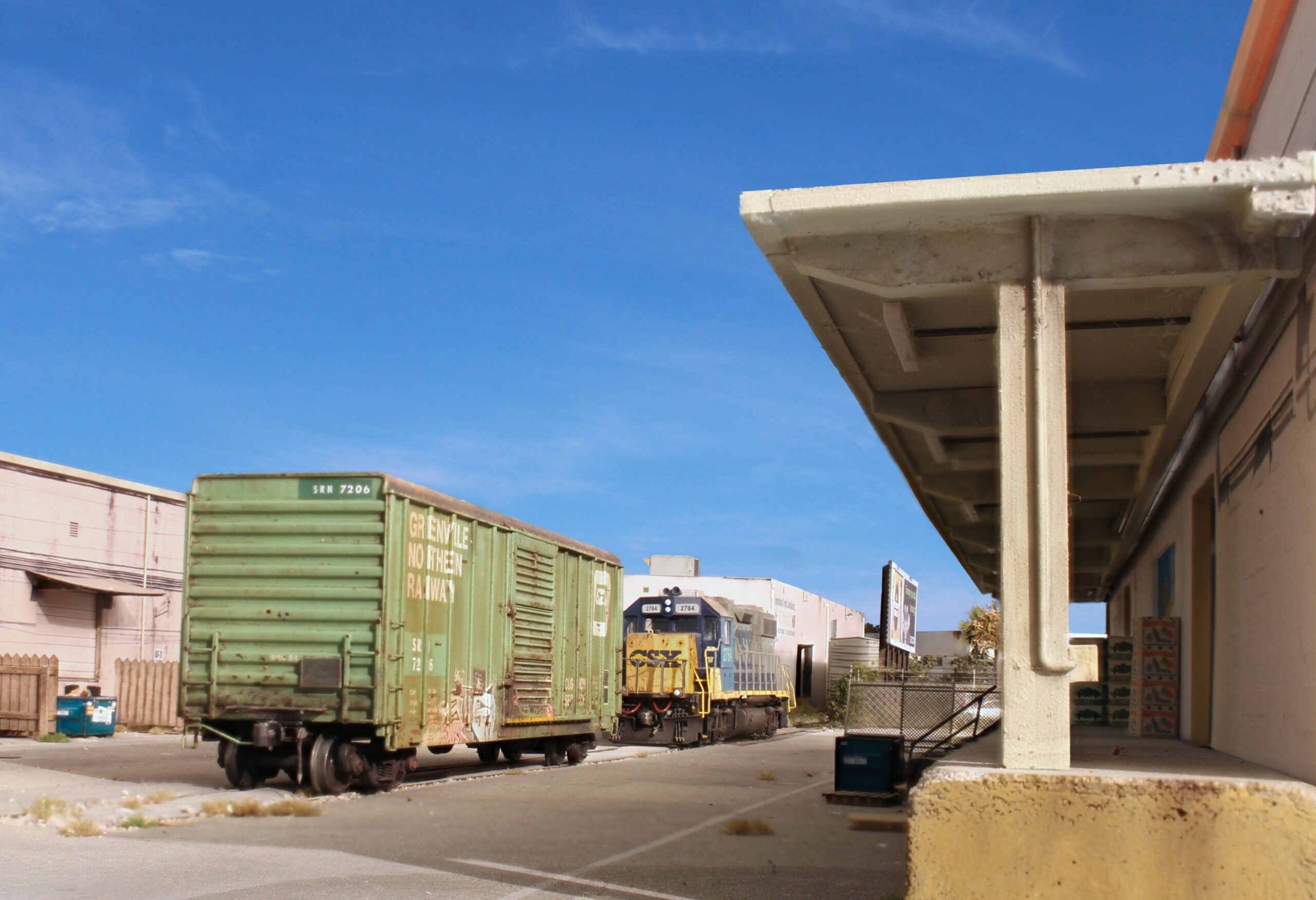
I never cease to be amazed at the variety of industries in Miami and how well suited to modeling many of them are.  There is a lot to choose from in the area north of Hialeah Yard both on CSX and FEC.


Note this nifty little team track splitting off from Hialeah Yard.  Here we have three tank cars unloading directly into a tank truck.


You'd expect this scene in the Midwest or perhaps Canada but Miami?  The industry is Higgins Premium Pet Food.  Note the Canadian National 'wheat' hopper.


December 2, 2010

The Empty Promise of Exclusivity


“I don't care to belong to a club that accepts people like me as members.”  Groucho Marx


Is there a direct relationship between how exclusive an organization is and its value?  In a few cases, maybe yes, the Navy Seals being an example.   In many more cases though, the answer is often…no.  Because an organization is ‘exclusive’ doesn’t necessarily mean its members benefit more than if they belonged to a more inclusive one.  Often, ‘exclusivity’ branding is nothing more than a clever marketing strategy (and a legitimate one at that) used to inflate the product or organization’s perceived value to prospective applicants or customers.   It’s incumbent upon the ‘customer’ to separate their ego, their natural desire to feel special ,from the purchasing decision and be realistic about what the exclusive organization has the power to deliver.  The relationship between exclusivity and ultimate value is a loose one if it even exists at all.

 It’s natural to want the best, particularly when it comes to our children.   We have the best of intentions when we try to get them into something that will better their lives and it’s in that quest that we are at our most vulnerable to the empty promise of exclusivity.   Whether you are a school, club, or organization one of the most effective ways to have parents line up at your door is to brand it as exclusive.  All you have to deliver in a convincing manner the following message, “It will be tough, but if your kid gets into our program it means he is special and under our guidance his future prospects will be elevated to unimaginable heights”.

The chase after exclusivity is stressful for the child and the parents.  Often, when the experience is over the value received is on par with a less exclusive organization.  If the value is higher, it’s only marginally so and not in proportion to the dollars spent and stress incurred.  The chase for exclusivity -  lots of stress, lots of expense, and if there is incremental value it is not in proportion to the strife needed to get it.

Here’s an example.  My son is an avid basketball player.  At age 12 or so he decided he wanted to, "get serious and move to the next level”.  That meant forgoing the rec. leagues with mandatory playing time for all and moving to a more competitive AAU team.  Web searches of various teams were top heavy with explanations of arduous multi-day tryout processes and it was made clear that very few ‘had what it took’ to play for such an elite (exclusive) team. Not only did such teams make cutting players a key aspect of their culture, existing players were told they needed to re-apply for their jobs via tryouts every three months.   Hmmm, pretty intense for a 12 year old.  We forged ahead and went to our first tryout.  At the end of the weekend they called the kids around to announce the lucky winners.  It was a painful and heart wrenching process, as they passed out green cards to the 15 kids that made it.  At the 13th selection my son hadn’t received the card and I could see the anxiety creeping in.  14th pick.  Nope.  Last pick?  Nope, didn’t make it.  He was crushed and as a parent it was hard to watch.  I’ll never forget the look on his face as we watched the coach handing out the last cards.  That was rejection at the most personal level, to want to belong to something and be told to your face that you aren’t good enough.  By keeping my son out, the club had in fact made itself exclusive and thus more attractive to the kids that were in or wanted to get in.

 Not wanting to throw in the towel, I called the league commissioner and he emailed me a phone list of all the other coaches in the league.   I started at the top of the list alphabetically with a team called the Bearcats and got the first  coach on the line.  He seemed calm and really experienced with straightforward answers to every question.  Finally, the big question,  “When are your tryouts and how do they work”. “I don’t do tryouts, it’s open to anybody.  Everybody gets at least some playing time in every game.   Bring your son by to check us out.  The only thing I ask of the kids is that they work as hard as I ask them to and do what I tell them”.

No tryouts?  Open to all?  My first thought was this team must really suck, a rag tag group of all left feet that couldn’t get a position with another team.  The gym was really close and the coach seemed straightforward so, what the heck, may as well check it out.  The day we were heading to the practice I found another sheet with the league standings for the most recently completed league.  There were the Bearcats at the top at an undefeated 11-0.  That was confusing.  No tryouts? At least some guaranteed playing time?  11-0?

 We walk in the gym and I was stunned at the skill level, speed, and size of the kids.  We’d never seen anything like that and I could tell Zack was immediately ready to sprint to the door.  The coach gave him a warm handshake and told him to get into line.   Practice started following a militaristic structure of organization and discipline.  The warm ups alone were grueling.  Ten minutes into practice and my son high tailed it to the door.  I had never seen a 12 year old athletic team practice that hard.  There was no way my son could handle this, or so I thought at the time.  I called the coach that night and said, “Thanks but this is so far over my son’s head it’s not going to happen.  Can you recommend any less skilled teams”? That is exactly what I asked, can you point me towards any less skilled teams.

 His response, “No.”

 “What?” 

 “No, that’s not in your son’s best interest.  They all bolt the first day of practice.  This is what you tell him.  Say that since he practiced for ten minutes that constitutes a commitment and league rules say you can’t quit until the end of the season. Keep bringing him to practice.  He’ll keep running out but eventually will stay.”  That’s exactly what happened.  Slowly but surely he got used to it.  The high expectations coupled with limitless patience by the coach resulted in an astronomical jump in Zack’s playing ability and a fantastic experience.  The season started, and what do you know, the Bearcats played the team that had originally cut my son and just absolutely throttled them.  I’d be lying if I said I didn’t find satisfaction in that.   We stayed with the club until the coach retired and it ended up being one of the most positive, growing experiences my son has been through.  My son and almost every player on the Bearcats eventually went on to make their high school team, something that could not be said of many of the competing clubs.  The team was all inclusive… open to anybody willing to do the work.  

On a more expensive scale, the same issue arises when it comes to the subject of higher education.  It’s natural to want the best and most exclusive schools for our kids.   Unfortunately, it isn’t that easy.  There are very distinct limits to how much a school can do to make an 18 year old successful later in life.  You can’t buy it.  Success has to come from the student.

 Previously I went on record with my belief that a student’s success is driven primarily by their effort and attitude with the particular school being less of a contributing factor (with no criticism of the school intended).    I’m extremely skeptical of the notion of prestige schools and have deep doubts whether the high tuition produces a proportionate return in career success, income, or beneficial life experience.   I have to be careful here and make it clear that I have the highest respect for any educator that puts his sweat and blood into educating young people and don’t diminish in any way the professors at ‘prestige’ schools.  My issue is with the labeling and marketing.  It’s a system that leaves graduating students debt ridden, with incomes nowhere near in proportion to the tuition spent, and potential applicants under the ludicrous impression that if they don’t get into a specific institution that their life is ruined or at best on a path to endless mediocrity.  On the other side of the coin are the students that do shell out the bucks and graduate only to find that they are often on the same playing field as kids that went to less expensive schools and have no distinct advantage to show for the money.

There is a business value in successfully branding a school as exclusive.  If you successfully create that brand you can charge more.   I don’t blame them.  It’s marketing 101 applied in exactly the same manner as the ‘platinum’ credit card you’ve been exclusively offered (along with a million others) because of your lofty status in the business world.  Remember back in the ‘70’s the wildly successful (and now laughable) Members Only brand of windbreaker jackets?  It’s the same principle.   Believing we are in an exclusive club makes us feel we are making progress when in most cases it’s just smoke.  The burden falls on the purchaser, parents, and student to use common sense, and not let ego and the quest for status cause us to frantically chase empty promises.


November 20, 2010

Make Your Own Billboard

For those that like the billboard posted in today's progress photos, I've posted the template above so you can make your own.  Start by clicking the small thumbnail above to open the template to full size.  Right click and 'save as' to get the file on your computer.  Take a photo of your favorite billboard and clean it up in your photo editor, correcting for perspective.  Re-size your billboard images to 962  by 446 pixels.  You want this exact ratio so if necessary click the icon on the resize tab that maintains proportions to de-activate it.  Do a copy  paste of your sign on to the template.  You'll notice a thin shadow on the top and right.  Try to position your sign so some of the shadow is still visible.  Save at a resolution of 600 dpi and print it out at 1.7 inches tall. 


November 11, 2010

Enough Rope To Hang Myself


I was sixteen when the model railroad bug bit in earnest.  In the early years of the hobby EVERYTHING is interesting and we really want it all.  At that time my parents were on a two year overseas sabbatical and we lived in a small apartment.  Our Cape Cod house in the states, complete with basement, was rented out until our return. 

While overseas, I poured through my Model Railroader magazines over and over until they were threadbare.  Since our apartment was small, and a temporary arrangement, I limited my hobby activities to building freight cars and small structures.  That was a productive enough use of my time.  So far, so good.   In retrospect I did have room for a small switching layout and should have built one as a learning platform.   We returned to the states my junior year of high school with my enthusiasm for the hobby at fever pitch and moved back into our old home.

That’s the point where my dad gave me the rope…enough to hang myself.  “I’ve been thinking.  We really aren’t using the basement that much.  I’ll tell you what, if you want a third of it for a layout, go for it.   I’ve got a lot of leftover lumber from my woodworking you can use for the bench work.”  Our basement was about forty feet long with a completely unobstructed run along one wall. 

In a matter of days I had my track plan drawn up.   In this case the word ‘plan’ is a real stretch.  It certainly didn’t approach the most remote boundaries of anything that could be called a design with purpose.   I was going to fill every inch of that sucker up.  I’d read about hand laying track.  Nothing but the best for me, that’s the route I would take.  The fact that I hadn’t hand laid so much as an inch of track before was just a minor obstacle in my mind.   Having a forty foot long spaghetti bowl track arrangement laid tie by tie, spike by spike, that would be a sight to behold…onward soldier.

The bench work went up fast enough.  Soon, I was off and running to the next step, the track.   Hmmm, not as easy I thought.  After a few weeks I got the first turnout done.  Time to run a train through that turnout.  Well….that’s not working so well.  It looks like a turnout but is acting like a derail.   I’ll lay some flex track (which is what I should have done in the first place).  Some success, trains are running.  Second problem … where are they running to? The track plan was totally meaningless.

To make a long story short, the entire project collapsed under its own weight and complexity, lack of purpose, and wildly unrestrained ambitions.   It was a blessing though.  It was a critical lesson learned at an early age.

In terms of personality types I’ve been told I’m a “rescuer”, always trying to save people from themselves.    As you read through my blogs you might think I have something against large layouts,  I don’t….as long as the builder has some previous layouts under his belt and knows what he’s getting into.  Far too often though  I’m seeing an adult, new to the hobby,  stringing the proverbial rope up to my boyhood oak tree as they embark on that voyage to build the ‘huge dream layout’ as their first effort.    In these cases I typically have flashbacks to that first layout of my teenage years and have the impulse to scream “don’t do it. “    As I get older though I realize more and more you need to let people make mistakes and hopefully learn from them.   Some will leave the hobby in frustration, never to return.  Hopefully, more will learn from their missteps and adjust.


November 1, 2010

Easy Way/Hard Way


Achieving successful looking modeling results is 80% color and material selection with experience/skill probably only accounting for around 20% .  The great news here is that beginners can achieve great results right out of the starting gate and more experienced modelers can improve their results quickly simply by switching to better materials.   One crucial area where this is brought home is ballast selection.  High quality ballast materials look so much better and are  much easier to work with.  Part of the problem is that the inferior ballast materials are  readily available and in such mass distribution that there is a natural tendency to use them.  DON'T!   What you need are ballast and soils made from natural materials that have subtle color variations and granule sizes.  Artificial ballast colors are too uniform in color and grade and are not stone so they tend to be difficult to work with.     If you want to make your life easier and improve the looks of your layout the first step would be to place a call to Phil Anderson at Arizona Rock and Mineral Company.  He will require a minimum order of six bags.  Listed below is a suggested starting order for ballasting rail as well as material for a soil base.  He ships within 24 hours and you're looking at about $45 parts and shipping for that order.

Arizona Rock and Mineral.  Phil Anderson.   www.rrscenery.com   928-636-9275 (Mountain Time)

bullet

(2 bags)   138-2 CSX Blend (this is just a basic salt and pepper color) HO scale

bullet

(1 bag)     138-1 CSX Blend N scale

bullet

(1 bag)     1221 Steam era yard mix N scale (very useful off black color)

bullet

(1 bag)     1290 Concrete (a good muddy gray)

bullet

(1 bag)     2000 Industrial Dirt

Note that I've listed a number of N scale grades.  This is because they have finer grains.  I generally do a lot of mixing in a paper cup.  For track ballast I mix the N and HO grade CSX blends together.  For dirty soil I mix the N scale CSX ballast and concrete together with a pinch of industrial dirt.  Use your imagination.

For ballast adhesive I've made a change in the last year and only use pre-mixed matte medium.  I suggest this from Scenic Express.  I've also changed the method of applying the matte medium to that of solely spraying it on with a fine mister bottle (as opposed to eye droppers or bottles).


October 26, 2010

It Was A Disaster, I Quit!


Some lessons can only be learned the hard way, through experience and by doing.  My son is now a sophomore in high school and is at that age where he is increasingly interested in the dating ‘experience’.   Without exaggeration I think it’s fair to say he has his eye on a new female ‘person of interest’ every week.  A few weeks ago one of those ladies showed reciprocal interest and asked, ‘Oh, by the way, can I borrow fifteen dollars?”  Uh, oh.  You can see where this is going.  Sure enough, in short order said lady and his fifteen dollars were gone, never to be seen again.  Upon repeating the story at basketball practice the other dads were quick to put it in perspective by stating that as you get older the game doesn’t change but you can start adding zero’s after the fifteen.  Lesson learned and off he went, wiser for the experience.

The same applies to model railroading.  You simply can’t advance your skills without jumping in, building things, making mistakes and learning from them.  When you look at a well executed model or layout it has to be with the knowledge that it took a lot of missteps, twists, and turns for the builder to get to that level.

 When I meet a new modeler I’m always curious about their layouts, past and present.  It’s fairly common to have the person look down, shuffle their feet and say with some discouragement that yes, they recently built a layout but it didn’t turnout out very well.    I’ll follow up with a question about what they mean by ‘not so well’.

 “Well, the curves and turnouts were too tight, the trains constantly derailed, the aisles were too narrow, and the grades caused a lot of problems.  The hidden track was a pain and I laid a lot of track too far from the aisle.  The ¼” plywood I used for roadbed warped”.  They’ll say the layout was a ‘disaster’ or a ‘failure’.   After that experience they are reluctant to try again for fear of experiencing similar results.  Maybe they feel they don't have the skills necessary to participate in the hobby and should consider a different pastime.  Maybe they should  play it safe from now on and just watch others participate.

 In these cases the modeler is absolutely, dead wrong.  It wasn’t a disaster, or a failure.  Just as Thomas Edison discovered a thousand filaments that didn’t work in a light bulb, the modeler has taken the same path.

They learned an enormous amount from these early attempts.  If they were to try again, the next result would not only be better but light years better.  They’ve learned what they didn’t know.  They’ve learned where the trouble spots are.  Now they know what skills and knowledge gaps need to be filled.  These are all valuable lessons that could never be learned had they not built the ‘failure’.

After 35  five years in the hobby, I still find a lot of ways ‘not’ to do things, that is, I still make a lot of mistakes. If nothing else I discover a lot of things I’d do differently the next time.   The one thing I have learned is to practice on a scrap first so the mistake can be discarded without damaging a good model. 

The mistakes of accomplished modelers won’t show up in magazines.  You only see the things that worked, not the five that didn’t.  What these modelers have done is noted past mistakes, adjusted, and tried again.

Don’t fall into the trap of not starting until you can achieve perfect results.  Don’t wait on perfection.  Jump in and enjoy the process.  Evaluate your results with dispassionate objectivity making mental (or written) notes on those things that worked and those that didn’t.   The key skill is to be able to recognize and make note of the mistakes.

Beating yourself up or giving up does no good.  Not doing anything for fear of making a mistake is far worse.  Look back on your past projects as valuable learning lessons necessary to move on to the next skill level.  If a layout didn’t turn out, pick yourself up, dust yourself off, make adjustments and get back in the saddle.


October 18, 2010

If I Had a Million

Five years after I placed the first slab of bench work East Rail provides as much enjoyment as ever.   Here's how it looks today.


Between work, family activities, and construction of the Downtown Spur my East Rail layout has sat essentially ignored and unused in the corner of my shop for what has probably been close to a year.  To protect it from saw dust, paint dust, and god knows what else, I’d carefully draped and clamped plastic wrap tightly down from the fascia.  Every several months I’d glance over at it and wonder if the time had come to seriously consider selling it or harvesting the useable components and scrapping the rest. 

A few days ago I wrapped up a project in the shop and decided to lift the veil and see how East Rail had fared over the past year.  More dust had gotten in under the wrap than I would have expected but nothing that rose to the level of damage.  For some reason the desire to run it some more crept over me and I spent a few relaxing evenings carefully dusting, vacuuming and cleaning the rail.  In short order it was good as new.  A flip of the throttle switch and I was immediately transported to 37th Avenue as the locomotive lazily went about its chores just as the real life counterpart does almost daily. 

Call it an epiphany but one thing become abundantly clear, this is the best layout I’ve ever built, the only yardstick being the enjoyment it provides.   The Downtown Spur is fun from the standpoint of the long main line run and the variety  of potential projects to work on.  My N scale Monon produced many pats on the back largely due to the fact that it hit dead on the primary interest of the hobby, the steam to diesel transition era.  But from a purely personal standpoint, East Rail has been undeniably the best. 

In Linn Westcott’s track plan book there is a chapter called “If I Had a Million” where he outlines how he would have obviously used the money – to build an absolutely massive, barn filling model railroad.  To each his own.  I can say with certainty what I’d do with my model railroad million.  I’d put $999,000 of it into a condo overlooking the Miami River and use the remaining $1,000 to build East Rail 2….all twenty square feet of it…tucked into the corner of the den.


August 29, 2010

Why We Build Model Railroads 


Why do we build model railroads?  Psychologically, what is at play that compels us to create something that, if viewed at face value, could be mistakenly taken for a detailed toy? 

Like many people, both in and out of the hobby, I’ve made the mistake of trivializing model railroading.  Over the past several years I’ve become keenly aware of how deeply important the hobby (or any hobby) is to others.  It has nothing to do with toy trains.  It has to do with basic human needs and who we are.  Addressing those needs makes for a more vibrant, fulfilling life.  In short, the reason model railroad is so important is exactly the same reason that  creating a painting, composing a musical score, or restoring an automobile is.   In our case model railroading addresses three primary needs. 

bullet

Creative Expression:  The need to artistically create is a basic human need that almost becomes a compulsion for many of us.  It’s an inner drive.  To not address it, detracts from the quality of life. 

bullet

Satisfaction of assembly.  There is a certain level of satisfaction derived from taking several base components and combining them into something that is greater than the sum of the parts.  It is satisfying to take lumber, a can of stain, and create a bookshelf.  There is satisfaction in taking a collection of people and forging them into an athletic team or company. 

bullet

Creating a copy of a portion of the world we enjoy looking at.  This gene doesn’t exist in everybody.  It does in us and our hobby brothers in other modeling fields.   If we have fond memories of a location, structure, or way of life, there is satisfaction in having a 3d version of it in our basement.  It’s the same need that is satisfied by photographs or movies of a pleasing subject.  Closely related would be creating a copy of a human practice we find interesting.  In this case I’m talking about the fascinating chess game of railroad operations. 

There are similar paths that can be taken, which is precisely why you see such an overlap in hobbies and interests.  Have you ever noticed how many model railroaders are also musicians, artists/painters, and automotive enthusiasts? 

It’s not the model railroad hobby itself that is key, but what it does that matters.   I can accept, and often agree, that miniature trains, in and of themselves, are not important (just as throwing a white ball at a person with a bat, on the surface, is not important).  The key point is this, it is a vehicle that fulfills critical, deeply ingrained,  human needs.    Needs that are important.  Needs that are not trivial.    To not recognize and address this fact of life, to dismiss how we are wired, would be a serious mistake indeed.


August 25, 2010

It's Not Offensive but....

An image of a homeless person sitting rail side amidst piles of trash may not be politically correct by hobby standards but it makes for a far more compelling image than more traditional, overly sanitized fare.


It, and by ‘it’ I mean the content of a hypothetical media presentation, may not be offensive but, in an effort to be ‘safe’ it may end up being pretty damn dull. That’s the silent trap that can spring from anything related to the creative arts whether it is print, film, music, or…model railroading. 

Like most people, it would bug me if I inadvertently offended somebody or made them uncomfortable (which is why, as I get older, I keep my mouth shut more and more).    Within the arts, this safe position should be the starting point but it can be taken too far.  If we bend so far back to neutral in an attempt to not offend a single soul we end up with content that is so bland as to be unbearable. 

I remember a favorite radio station that had a great mix of edgy talk shows, interviews, and great music.  The station was vibrant and creative.  Eventually it came under new ownership.  They quickly went about sanitizing it in an attempt to make it non-offensive to everybody.  The hope being that it would attract more listeners.  It backfired.  The show was so bland, filled with so much elevator music, it would literally put you to sleep at the wheel. 

To an extent, this overly cautious approach permeates our hobby as well.  To be specific, I mean how it is presented.   Every effort is meant to deliver all aspects of model railroading with a G rating.  While the intent is honorable, it does underestimate the intelligence, and maturity of the audience.   It insults their ability to say, “I don’t care for that article (or blog, or video), I’ll check back again tomorrow.”  We aren’t so fragile that a single item we don’t care for will turn us away forever.   If a model railroading website had a tab on micro brewed beers, those that weren’t interested simply wouldn’t open that web page. 

By presenting our hobby in such a dumbed down, sanitized manner, we deprive the participants of a more creative experience.   That’s a diplomatic way of saying the overly cautious, G rated, presentations can be really, really boring. 

Watching an actual railroad is a totally visceral, energizing experience.  Machines with astronomical horsepower ratings transport enormous amounts of material through difficult environments.  These are environments that don’t look like Disneyland but are gritty, soot colored, and generally not in the best part of town.  These are environments with visual texture and mood.   We love it.  We want it.  We want a copy of it in our basement.  If we wanted soft and fluffy we’d take up knitting.    

Things would be a lot more interesting if the print, digital, and video presentations of our miniature worlds had the same edginess as the real thing.  To say the viewers can handle it is an understatement.  Not only can they handle it, they crave it and want it in the worst way.  For every one person that leaves in a huff, ten more will come in the door for the richness of the experience.   As it stands now, making 'not offending one person' drive the whole show  makes the hobby unpalatable to those looking to come in.  Really, why would they want to.  The analogy would be going to a cineplex and having every screen featuring something for toddlers.  Nothing inside will be offensive but you wouldn't go in either.

It will never happen with the mainstream hobby media.  It can happen though with individual websites, webzines, and YouTube.   When I wrote my first non-rail related blog on my site I have to confess I was a little anxious about the feedback.  Now the blog is by far the most visited portion of my site and the feedback from the non-rail posts has been overwhelmingly positive, so much so that people almost seem disappointed when I go back to model railroading. 

We read Michael Connelly, George Pelecanos, John MacDonald, watch the Wire and the Sopranos and don’t wither.  Certainly these same viewers could read a short story about railroading with actual ‘rail language’ and take it in the same context.  We can have edgy titles to our articles.  Graffiti and line side debris may be unsavory but it actually exists and portraying it elevates the experience.   Un-sanitized aspects of life and society can and should be portrayed.  Web blogs and YouTube videos can push the envelope.   Truly great music can be the soundtracks of our videos. So much more can be done to keep this hobby from looking like a soggy bowl of cold mashed potatoes.  We haven’t even scratched the surface.


August 15,2010

Are Dramatic Scenes Necessary?

A big part of model railroading is creating images that we enjoy looking at.  Although totally lacking in drama, this shot of the Sanchelima Dairy is one of my favorites of the layout.


A visitor to my website brought up an interesting point yesterday.  It’s an issue that I’ve been subconsciously aware of.  Given its importance, I can’t believe I haven’t given it more thought.   This fellow dropped me a note stating that if I’d followed through on an earlier track plan idea I would have been able to develop a very stunning scene featuring the Miami River.  Better yet, the scene would be right by the door making it the first thing a visitor would see.  I do remember making the design decision not to use that version of the track plan but it took me awhile to figure out why not having that scene didn’t bother me. 

This issue arose a few months ago when enough of the Downtown Spur layout had taken shape that I could get a sense for how it would look.  I clearly remember, thinking, “this really isn’t very impressive”.  I didn’t mean it in a negative way.  Perhaps a more accurate way of summing up my thought was, “this really isn’t very dramatic.”  I also remember not caring and casting aside this important issue without any more thought.

A month later when some experience modelers came over for a layout visit I tossed out an innocuous comment to see how they’d react.  I think I said something like, “The layout isn’t that visually impressive is it?”  They looked at me as if to wonder why I’d ask such an irrelevant question,  shrugged their shoulders, and continued to examine the layout.

Here’s the central question: 

Should a model railroad contain at least one dramatic scene?  In other words, is an eye catching visual a necessary design criteria for a successful model railroad? 

It’s really a thought provoking issue.  After thinking on it for a day, I’m a little surprised how I feel about it.  I certainly enjoy looking at a well executed dramatic scene on a model railroad, particularly if it’s not contrived.   Having said that, I really don’t care if a model railroad has such a visual centerpiece or not.    It took me awhile to figure out why.    

When we look at a model railroad we want to see pleasing images.   Where I was getting hung up was the association between dramatic images and pleasing images.  You can have one without the other.   For example, we enjoy looking at a well composed dramatic photo of the Grand Canyon.  However,   we would equally enjoy a shot of a quiet pond.   Drama is just one arrow in our quiver.    I’m totally satisfied with the Downtown Spur because, to my eye, I enjoy looking at it.  It does what I wanted it to do. It transports me to a place a find interesting.   

You can build masterfully created dramatic scenes into your model railroad and have something that you really enjoy looking at.  That is the more common approach in our hobby.    I realize now that such an approach is not a requirement for visual or emotional appeal.   You can have something just as satisfying visually without it being dramatic.


August 2, 2010

Alclad 2 Metallic Paint

It's amazing how long we can put off learning to use a new material or method only to find out how easy it is and how much better the results are.  This was my case with learning to use the Alclad 2 line of metallic paints.  For those not familiar with it, the Alclad 2 line is a specialty brand of metallic lacquer paint known for a metallic finish that is incredibly realistic.  I finally overcame my inertia and gave it a try.  I love it and can't believe I put it off for so long.  Although Alclad requires different methods and has a different feel, it is very easy to use.  A step by step tutorial can be found HERE.  The tutorial is excellent but let me emphasize a few points:

bullet

Alclad lays down a very thin layer.  Any speck of dust or scratch will show through.  You need a very clean, blemish free surface.

bullet

A good starting color is "chrome" (pn ALC 107) which can be picked up through Horizon Hobbies.

bullet

Keep the airbrush pressure low, around 18psi

bullet

Use a very fine airbrush needle and crank it down to almost nothing

bullet

Keep the brush an inch to an inch and a half from the subject surface or else the paint will dry mid-air and have sort of a frosty look to it.

That's about it.  Start by giving your model a black primer coat of Krylon Fusion Gloss black. Let it dry over night and lay down the Alclad.


July 30, 2010

Five Best Muscle Cars of All Time

This is a hotly contested list in my mind with many other worthy contestants close behind.  The winners would likely vary depending on my mood on any given day.  Criteria for consideration is simple.  To qualify an entrant must have: classic styling, eight cylinders each the size of a Quaker Oats box, and enough horsepower that the intake sucks in small animals as the car drives by.

1966 Corvette Stingray

427ci, 425hp

In action


1964 Pontiac GTO

389ci, 325hp

In action


1961 Ford Galaxy Starliner

390ci, 375hp

In action


1971 Plymouth Hemi Barracuda

426ci, 425hp

In action


1962 Chevy Impala SS or Bel Air

409ci, 409hp

In action


July 30, 2010

Family Friendly Layouts

Simple steps can make the layout much more palatable to the rest of the family and make them more receptive to having it in the house.  A clean Pullman green fascia, absence of clutter and junk, nice shelves, and not having tools scattered about are inexpensive ways to make the model railroad more family friendly.


Awhile back I got a call from an old buddy of mine inviting me over to see his layout.  I hadn’t seen ‘Buddy’ in years and jumped at the chance to catch up on things and see his model railroad.  After setting up a time for the visit he switched to what was probably the real reason for his call, to subtly vent the frustration he felt with his unreasonable wife.  Unreasonable Wife had banished his layout building activities to the garage.  Buddy was pretty put out about this.  After all, he contributed half of the household income and all he wanted to do after a hard day at work was indulge in the simple pleasure of working on his layout.  I have to confess, he sucked me in and had me ready to offer a shoulder to cry on. 

Stepping into Buddy’s house I was struck by how nicely done the interior was.  In addition to being neat as a pin somebody had hand sewn the draperies and valences and put a lot of effort into making it a nice place to live.  I quickly guessed this wasn’t Buddy’s doing.  He was oblivious to the nice environment that somebody else had created around him.  After exchanging pleasantries Buddy escorted me through the kitchen.  Pausing for drama, he had me stop at the door so he could stand to the side, open it and roll his creation out in front of me.  With great fanfare, he swung the door open.   As they say in the valley, “Oh……my…….God!”  Had there been a gas explosion in the garage? 

Buddy is a good modeler but I couldn’t even concentrate on the layout.  It sat on battered plywood that looked like it had been pulled out of a construction dumpster.  Wires dangled beneath like a multi-colored rat’s nest.  Tools lay scattered all over the garage, covering more square footage than the layout itself.  Then there was the, how do I put this delicately, the endless piles of crap. There were boxes and boxes of battered Tyco rolling stock, brass rail, wire, junk, junk and more junk.  I quickly realized that not only was his spouse entirely reasonable, she was a saint for having enough restraint not to call the building inspector on her husband.    

Let’s hold up our end of things folks.  Nobody wants something like that in the house.   Every family dynamic is different but there are some very simple steps that can be taken to, if nothing else, increase the likelihood that you can get the family on board with having the layout in the house.  Here are some focus points for creating a family friendly layout: 

Fascia:  The fascia or facing of the layout provides a frame and goes miles towards creating a clean look.  You don’t have to be a master millwright or spend a lot of money to put something clean together.  If the layout has some elevation I suggest ¼” MDF (basically a high quality Masonite) cut to the profile of the scenery.  If the layout has a relatively flat surface then floor molding will work.  At a very early stage in construction get the fascia mounted.  Attach it to the layout face with panelboard  nails as opposed to screws.  The fascia color is important.  I agree with the general consensus that earth tone greens such as Pullman green or olive look best.  Avoid primary colors (Red, Blue, Yellow).  Avoid tans.  Avoid pine stains or any wood stains for that matter. Avoid black.  If you are stuck I use a Behr Paint mix called ‘Wild Rice”. 

Legs:  If your layout is supported by legs (as opposed to shelf brackets) paint the legs semi-glass black.  This will hide them and downplay any defects. 

Wiring:  There is a tool called a ‘cable tacker’ available at most hardware stores that makes quick work of tucking your wiring neatly under the layout.  A cable tacker is basically a staple gun that dispenses cupped shaped staples that don’t pinch the wire. 

Bench work width:  In addition to design reasons for doing so, narrower bench work also looks much better in a finished room.  Once you approach a bench work width of 24 inches, you are getting pretty wide.  I suggest a target width in the range of 16 inches to 22 inches. 

Beneath the layout:   I’ve seen a number of modelers hang black drapes down from the fascia to screen off any mess beneath  as well as to hide the legs.  This does look nice. In my opinion though,  the drapes get cumbersome, collect dust,  and nice ones aren’t cheap.  My preference is to just avoid piling junk down there in the first place.  If you need storage, install some NICE shelves or cabinets.  Nice doesn’t need to be expensive.  Rusting milk crates, battered plastic milk crates, and old pallets don’t constitute nice shelving. 

Junk:  Get rid of all the junk in the layout room.  Set a goal of seven days to get it out of there.  Give it to a teenager, a club, or a veteran’s home.  If you don’t have somebody to give it to,   THROW IT OUT!  I can hear Buddy now, “ I’m going to sell it.”  No you’re not.  “I might need it ‘someday’.”  Doubtful.   “It’s worth a lot of money.”  Probably not any more.  Strategically accumulating Pennsy F units for a future layout is planning ahead.  Putting locomotives in a nice display case is collecting.  Purchasing a bunch of unrelated, disconnected items with no coherent purpose is hoarding and binge spending.    

Tidiness: At the end of the day, pick up your tools and leave the room in presentable, livable condition. 

I can’t promise this will get your layout back in the house but it will increase the odds!


July 24, 2010

The Rule of Three Tries

There has been a good thread on the Model Railroader Forum about the use of the Alclad 2 metalizer paints.  For those that aren't familiar with them, Alclad paints lay down a surface  that is amazingly close to true metallic.  Like everybody else, I suffer from inertia when it comes to teaching myself new skills.  I finally broke down and ordered some Alclad for some signal boxes I want to try it out on. 

When learning a new technique I subscribe to the rule of three tries.  In other words, it generally takes three tries to get the hang of something.  For example, say you're trying to learn to build your own turnouts.  The first attempt will teach you all of the things NOT to do, point out the problem areas and will ultimately be consigned to the trash (and it should be trashed.  Don't put it on the layout).  The second attempt will be rough but marginally good enough to add to the layout.  By the third attempt you will generally be off and running.  These practice tries can be run in short succession and for some things done quickly enough that you have the skill down in an afternoon.  The key point is to have the mindset that the first attempt may not be great, accept it for the valuable information you get from it and not get down.  Stick with it.  Understand that it is a process and the sooner you get attempts one and two behind you, the sooner you'll master something.  I think there are two myths surrounding the work of good modeling results.  First, is that somehow the modeler was touched by the hands of god and learned the technique on the first try.  No, the guy just practiced.  The second myth is that you need to devote an eternity of practice to acquiring a skill.  I disagree with that as well.  You do need to practice but you'll be amazed how far you advance if you work at something over just a few weekends.

Sometimes a modeler will reluctantly show me his layout, head hung low in discouragement.  The resulting model pretty rough on all fronts.  It's not what he sees in the magazines and he's ready to quit.  What he doesn't know is that,  if he builds another layout it won't be slightly better, it will be significantly better.   He'll circle the layout showing me all of the flaws and mistakes.  That's my point exactly.  The importance of the fact that he made the early attempt, made the mistakes, AND recognizes them can't be emphasized enough.  It's crucial at that point to not give up.  It's also absolutely critical to be aware of the areas that need improvement so they can be worked on.   Without having tried something, it's hard to approach another modeler and say how do you do 'X'.  No matter advice you get, the value will be watered down.  However, if you say, "I tried X, I had problems a,b, and c.  How do I fix them." Now you have the perspective to know what to ask.

Often modelers don't try to advance their skills toolbox because they look at a nice model and think they could never do that.  Well they could probably get pretty close if they made a few attempts and understood there is no shame (and tremendous value) in rough practice trial runs.  They  may also believe that so many months or years of effort are required to master the technique that it just isn't worth it.  Finally, they may just suffer from inertia....like putting off how to use Alclad metalizers.....for years.............


July 22, 2010

Reds

As a freshly minted civil engineer out of college, my first job was as a field engineer in the heavy construction industry, a field characterized by massive public works projects and the astronomical dollars associated with building them.  A large heavy construction contractor considers a twenty million dollar project to be a small one.   One of the primary challenges of that type of construction is that the unexpected is a daily event.  As soon as you scrape the first layer of soil off of mother earth the surprises start.  Utility lines exist that weren’t on the drawing, soil is less stable than expected, rock exists where it shouldn’t.  You are behind schedule and dealing with obstacles the second you start.   

The primary job of the field engineer is dealing with these surprises and making adjustments.  You need to take the original drawings and figure out how to modify the design on the fly so as to make it fit the situation as it actually is.  You need to straddle several worlds.  First are the structural engineers, the guys that got straight A’s in calculus class.  They design and prepare the drawings as if there will be no surprises.  Of course, that never happens.  You need to deal with the project manager, your boss, typically a vice president who is under enormous pressure to keep things on schedule and on budget and more often than not is in a foul mood.  You need to satisfy the owner’s representative, typically an un-motivated bureaucrat that seems to take perverse pleasure in exercising the only power he has in his life….. on you.   The bulk of your time though will be spent elbow to elbow with the steel workers, dockworkers, heavy equipment operators, and electricians that actually build the project, a group that doesn’t suffer fools gladly. 

My first assignment was at the site of a massive pumping station being built to supply water to a nearby nuclear power plant.  The challenge of this project was sinking a 100 yard diameter pit, five stories into the ground through very unstable rock.  In the construction industry, there is no ’break in’ period for new hires.  Usually your position has been sitting vacant for a few months so when you arrive you are pretty much behind already, expected to produce immediately, and thrown to the wolves.   

I was told I’d be assigned to working with the dockworkers union crew whose primary job was building a huge lattice work of steel beams and pilings to restrain the walls of the pit.  If the steel failed, anybody below would be killed. 

My first day on the job I walked into the field office to report for duty and, after what could not have been more than two or three minutes of chit chat with my new boss, was dismissed with a wave of the hand, told to get in the bed of a waiting company pick-up truck and driven the several hundred yards to the job site.  At the site I was introduced to one ‘Reds’ Norman, superintendent of the dockworkers union based out of Philly.  Reds was morbidly obese, stood about five ten, and had skin that looked like red leather hence the ‘Reds’ nickname.  Decked out in tan overalls, white T-shirt, battered hard hat, tattoos,  Marlboros in his vest pocket, a cigarette in the corner of his mouth with about an inch of ash hanging off the end Reds was probably in his mid fifties and a true original.   

He seemed to be expecting me and swallowed my hand up in a vice grip handshake.  With the obligatory niceties behind him his  eyes narrowed and smile faded as he began to size me up.  We’d be working right next to each other and I would be shuttling back and forth between him and the management office.   Given his shrewd evaluation that I could  impact his life for better or worse, he took a much more intense interest in the situation (my arrival on the scene) than the project manager had.  Although he was polite, I could tell the next few weeks would be spent with him figuring out what to make of me.  In his black and white view of the world I would fall into one of three categories of people, only one of which was good.   If I could be trusted not to make him look bad or rat to management about what he was up to and was a hard competent worker then I would be labeled a ‘decent son of a bitch’.  If I was harmless but weak and incompetent I would be a ‘worthless dumb f…k’.  The worst would be to be labeled an untrustworthy weasel or, in his words,  a “f…..’n prick”. 

Reds probably had an IQ of over 140.  He also had the uncanny knack of flipping a switch and appearing to be as dumb as a post if it served his purpose or got him out of a jam.  He was ‘untouchable’ on many fronts.  He had maximum seniority in the dockworker’s union (A union he loved to tell me he suspected was tied to the mob.  This was a typical Red’s embellishment used to liven up a conversation).  He was one of the most skilled of his craft and he had broken in numerous other engineer apprentices, including the present owner of the company.   

Reds was also a problem to management on a few fronts.  He had learned long ago that if you work too quickly, all you do is  hasten your trip to the unemployment line.  He had developed a work practice he called “f…. ‘n the dog’ which means looking productive without being very productive at all.  He took enormous pride in his work but often used ‘doing a good job’, a better job than the situation called for, to drag a task out.  It was not beyond Reds to know a drawing was wrong and sink a piling in the wrong location just so he could get the extra hours to remove the pile and re-install it in the right place.  In those situations he would then blame it on the field engineer (me on a few occasions) and throw his hands in the air in mock exasperation saying, “These kids ‘deez days. I try to work wit ‘em but there’s only so much I can do.  What da hell do they teach dem in school?” 

Ultimately it IS the field engineer’s job to make sure the structural members go in the right place but clearly Reds wasn’t above occasionally building off what he knew was an incorrect drawing  just to extend his employment.  I learned I had to watch him in those situations.  His ultimate responsibility was to keep his crew gainfully employed as long as possible, not to take a bullet for my mistakes. 

The other problem with Reds was that he’d get bored and create situations just to keep himself amused.  For example, stating that the executive vice president had once gotten drunk and confided in him a secret fetish about wearing women’s nylons.   All of this rolled into what the owner called “Red’s never ending bullshit.” The owner would constantly threaten to fire Reds but, knowing he couldn’t live without him, never did. 

My first several weeks Reds spun out a number of very subtle tests to see how I’d handle them.  He’d make disparaging remarks about management to see if I’d pass  them on to the home office.  He’d intentionally make small mistakes that put me in a jam to see if I blamed him.  He’d see if I could take a practical joke.   He wasn’t a fool and wasn’t going to get burned by a twenty year old kid he didn’t know from Adam. 

I must have passed the test because about a month in, my relationship with Reds and the unions dramatically changed from polite but stand offish to being branded “a decent son of a bitch’ .  In retrospect it was almost ceremonial.   

The union crew’s day ended at 4pm but I was expected to stay until five or six. One Friday about 3 o’clock  Reds called me on the radio in a frantic voice. “Mindelhime (he intentionally mispronounced my name to jack with me) I need you out here and I need you now.  We got us a ‘seetch – ee- ashun’ (Translation: a situation.  A big problem) out here.”

I went from zero to dead panic in a few seconds.  The field engineer’s job is to make sure there aren’t too many ‘situations’ and even a minor one could cost thousands of dollars to correct and  could get you fired.

 “What’s wrong?”

“It’s too serious to talk about on the radio now get your f…in’ ass out here and I mean now.”

I left the office at a dead sprint , face ashen white, rolling over in my mind the million possible mistakes I could have made that would cost me my job in the first month.  I found Reds calmly leaning against his battered black F150 pick-up truck.  Spotting me, he stuck a leathery hand in his pocket, rolled out some twenty dollar bills and said, “I need you to run down to the deli and pick up a few cases of beer for us.  Make it Schaefer. “  

“What about "the situation? “

“ There ain't  no f…. n’ situation.  I just wanted to make sure you didn’t drag your ass getting here.” 

Reds  was the one guy that could keep the project moving or bring it to a dead stop so I knew it was in my best interest to keep him happy.  A half hour later I returned with the beer to see he and his crew all sitting on the ground like Indians at a camp fire.  I set the beer cases next to Reds and turned to head back to the office to catch up on my reports that were now about an hour behind. 

“Whoaaaa there.  Where da f…..  you tink yer goin’?”

“Back to the office.”

No.  No. No. F…., No!”

He then reached into the case, pulled out two Schhaefers and tossed them to me.  He patted the ground next to him and said, “You ain’t goin’ nowheres. Now sit yer skinny ass here with us.”  To emphasize his point he grabbed one of the beers from my hand, opened it, and stuck it back in my hand.   This all seemed pretty much against company rules so I politely declined saying I had reports to do and that the project manager was waiting on me.

“F… all that. Give me the f… n’ radio.”

In a matter of seconds he had the project manager on the line (also a former Reds ‘apprentice’).  He switched to his high IQ, business mode.

“Yeh, uh Don.  Reds here.  We had a pretty serious situation out here with pile number 97 but that new kid Mindheim pretty much has it worked out. Did a good job. He’s pretty green but I think if I can work with him he’ll be o.k.  Anyways, I’m going to need him for the rest day with this pile 97 deal.  Can I have him?”

The project manager, obviously focused on bigger problems, signed off on it and I was free for the day. Reds raised one eye brow, smirked and tapped my beer can in a toast.  He loved playing the game. 

This Friday routine became a weekly ritual.  Talk would start with endless rehashes of days on old jobs, old co-workers, and as the beer intake mounted, various sexual conquests most of which I’m convinced were totally fabricated.   In the ensuing months they taught me how to weld, how to use a blow torch, and how to drive heavy construction equipment.  To bolster my confidence Reds would seek a consultation with me to ask how to solve a difficult problem even though he knew full well how to solve it.   As people go, he was as good and solid as they come. 

 As is the nature of the construction industry, I was eventually transferred to another city.  Without fanfare, the union guys called me aside and presented me with a gift I still cherish to this day, a handmade paperweight made from one of the rocks we had blasted out of the ground. 


I always wondered what happened to Reds and his crew.   Despite their coarse exterior, I realize in retrospect how vulnerable they were to the whims of the economy.  Guys like that are cast for one way of life and one way only.   If their employment prospects dim, they aren’t going to re-invent themselves as a website designer.  If their way of life disappears, they are lost, not having the ability to adapt and too much pride to do anything else.   Honest to the core and totally inflexible they are a fragile species indeed.


July 17, 2010

A New Day


For a number of years, perhaps five or ten, the hobby has slowly drifted to a state of hazy stagnation.  There is no air of excitement or buzz.   Fewer are charging to their basements on the weekends and nobody on the outside is clamoring to get in.  They aren’t clamoring to get in because there is no compelling reason to do so.   Even if there were a reason, those on the outside, (or those in the hobby but drifting), see no obviously apparent, clear roadmap, platform, or vehicle to enter and pursue the hobby in a satisfying and attainable way.   

Through a combination of societal events, and the natural cycle of things, we’ve reached the point where we need a new entry level platform.  That platform is the small to moderate size, modern era, switching layout.  It’s certainly not a new concept, but a case where the time for this platform has arrived.  People are motivated not only by seeing inspirational layouts but inspirational layouts that they can build. 

I’ve felt for many years that there is a vast pool of model railroaders circling the fringes of the hobby waiting for a way to get in, waiting for a reason and means to join.  I can’t entirely put my finger on it, but there seems to be a tinge of sadness at being on the sidelines as well as a lack of self-confidence, a misguided feeling that, because they may not yet possess a vast array of  modeling skills, that they aren’t worthy of joining the hobby full force and without apology.   

The common characteristics of these ‘sideliners’ are that they are smart, much more knowledgeable than they realize, personable,  large in number and a group the hobby desperately needs in the game.  Mobilizing this group of ‘sideliners’ and getting them building layouts will add new energy, new ideas, and a breath of fresh air that model railroading needs, and needs badly.  Such mobilizing improves the quality of life for the sideliner.  To a larger extent it improves the quality of life for those already actively in the hobby.   As the sideliners get up and going, their modeling works will ultimately provide inspiration and a jump start all of us.  Magazine circulation will strengthen, industry purchasing will increase, and the slow plodding ship that is the momentum of the hobby will gradually start steaming forward again. 

To an extent we have failed the sideliners through a lack of leadership, direction, and support.  We haven’t given them a roadmap.  Although they may not yet have attained a vast arsenal of construction skills, they have no interest in mindless starter layouts on the level of a Brio set.  They don’t want the frivolous Disneyland express.  They don’t want something that looks like a first grade craft project when they are done (nor does their family).  What they do WANT is something that: 

bullet

Is easy to build the first time out given basic construction skills

bullet

Offers sophisticated operational and visual interest

bullet

Looks clean and halfway realistic

bullet

Can be brought to a reasonable state of completion quickly and look tidy during construction

bullet

Doesn’t take up  a lot of space

bullet

Doesn’t require a  huge  time commitment

They want something simple and sophisticated.   Yes, the two CAN go together.   There is no reason that the beginner should resign themselves to something one step above a Tyco train set.    A well thought out switching layout provides that energizing combination of visual and intellectual captivation and attainability.  This platform is ready for its time in the sun.  I’m not talking about dopey switching puzzles.  I’m talking about small, simple, intellectually stimulating MODELS of a small piece of an actual railroad.  Switching layouts are: 

bullet

Simple to build

bullet

Intellectually stimulating and sophisticated

bullet

Fit any space and lifestyle

bullet

Inexpensive

bullet

Can be made operational in a short time span

bullet

Pack a lot of operational interest in a small space

bullet

Are easy to dress up the appearance in a manner that makes the rest of the family happy

bullet

Can be moved or disposed of when you move

bullet

Are a training ground and spring board for larger layouts

bullet

A good fit for those with ample resources but scarce time and energy

Switching layouts can be set in any time period but I suggest the modern era for several reasons.   First and foremost, being able to experience railroading’s full mass and power  rolling by in front of us provides constant positive re-enforcement.  If the visceral experience of watching, hearing, and feeling a sixteen cylinder machine the size of a house push a freight car also as big as a house down a grassy patch of track doesn’t get your juices flowing, nothing will. 

Rumors of the death of the ‘golden age’ of railroading are greatly exaggerated.   In an industrial setting, modern railroading unfolds with the same power and flavor as in previous ages.  In addition, information needed to model the modern era is readily available whether it be operational practices or infrastructure. 

Any reasonably secure, grounded adult understands that there is no relationship between the size of an object and its quality.  Leonardo Da Vinci’s horse sketches are just as worthy as Albert Bierstadt’s full wall murals.  Following that same line of reasoning the modeler should never have the sense of ‘settling’ when they build a small switching layout.   

There is no shame in being a beginner or building small layout.  The reality is that exceptionally handsome layouts that don’t insult your intelligence CAN be built on a first attempt.  Those sitting on the sidelines do belong in the hobby.  Those adrift in the hobby do have a catalyst to jump start their interest.  In both cases, the small, modern era switching layout, is a platform whose time has come.


July 8, 2010

Industrial Park Web Page

It's become clear to me that I've under estimated the amount of interest among modelers with respect to modeling and railfanning modern industrial switching districts.  With an admitted bias, they make for fascinating subjects both to view in person as well as to model.  I  receive a lot of inquiries about the prototypical East Rail industrial park and Downtown Spur in Miami.  The great news is that they are just the tip of the iceberg. The west side of Miami is literally blanketed with industrial parks, not just CSX (formerly SAL) but  FEC as well.

Contrary to what the doomsayers profess about the demise of the golden era of U.S. railroads, throughout the U.S., the scale of modelgenic, rail served industry is massive, so much so, the challenge is how to take it all in and how to narrow down our modeling subjects.    Miami is not an enigma.  There are many cities with equal appeal.  To that end I've created a new web page to serve as an information center showing the locations of industrial parks in the U.S.  (There are some great subjects in Mexico although, given today's political climate, I think I'll limit my research of those cities to the internet).  I'm hoping that updating and expanding this page will become a community effort.  If you know of cities with vibrant and appealing rail served industrial districts, drop me a line and I'll add them to the site (help me out though and let me know roughly where in the city the site is).

To visit the new page click HERE.


July 4, 2010

Athearn Reefer Upgrade

If you plan on modeling Miami you'll need a stable of reefers to service the produce businesses.  Some time back, I purchased the Athearn 57' reefer shown above with the thought of using it as a stand in until the appropriately lettered Intermountain units came out.  I had some time today so I thought I'd putter around with it.  This would make a good project for a teenager or other entry level modeler.  In assembled (ready to roll) form the cars cost around twenty bucks.  As a blue box kit they are less than ten dollars. 

When taking on any modeling project you should, even if only casually, be aware of what your goal is.  Do you want something that looks very realistic or do you want something that has all of the correct details.  It is counter intuitive but, you can have one without the other.  The two are NOT necessarily related. If visual realism is your goal, your attention should focus on two areas.  First is the correct treatment of color, shadows/highlights,  and weathering.  Second is how you will deal with un-realistic or grossly oversized shapes.  Making sure you have the correct details can  be very relaxing  but isn't directly tied to realism.  For example, if you look at the model above, would it appear to be more (or less) realistic if the ladder had four rungs instead of three?

As I mentioned, today I was just playing around with the car to see what I could do without expending too much effort.  I knocked the shine off with Dullcote and then applied chalk weathering to bring out some contrast. For chalk I used a 50/50 mix of dark brown and black applied very lightly and in layers.  The right side of the car with the WFE logo is about what I want. The left panels could use some more subtle contrast and shadowing.  The underbody was painted grimy black.  I painted the tack boards light gray and added some scrap decals for waybills although this doesn't impact the appearance that much.  The car would benefit by running a sharp tipped black pencil along some of the cracks and seams to insert shadows.

The molded on grab irons and ladders aren't as visually objectionable as you would think.  Shaving them off and replacing them with stand off ladders would be an enormous amount of work without a proportionate visual payoff.  The most objectionable visual problem is the grossly oversized stirrup steps.  I shaved these off, and for less then two bucks, picked up some nice Detail Associates replacements.  Replacing those stirrups plus the weathering got the car 90% of the way home visually.  Looking at the photo, the brake wheel is noticeably oversize so I might replace that with a Kadee at some point.

Other details include scale couplers, air hoses, and a short piece of wire to represent the exhaust stack.  Unless you have uncoupling magnets on your layout, there is zero need for the unsightly J hook/air hose hanging off of the Kadee couplers so that can be snipped off.


 July 2, 2010

East Rail Update

One of the challenges of modeling modern industrial parks is that the landscape changes so frequently.  The nature of commercial real estate is that warehouse tenants change.  This can be a mixed bag for the modeler.  A favorite industry represented on our layout may uproot and move across town leaving an empty building that is no longer rail served.  However, this dynamic can work to our advantage also in that previously empty buildings may get a new rail served tenant.  I know a number of visitors to this site are modeling the East Rail industrial park.  Putting two and two together there is a new tenant in town that takes rail shipments, Veco Enterprises Group on 59th Street.

When I took this photo of the structure in question in 2006 it clearly was not rail served.  In this view I am standing on 59th street facing east towards Guixens Food Group.


When I re-visited the same location in January of 2010 I became curious.  The structure had been re-painted and a 'Stop/Dismount' sign had been placed on the spur.  CSX would not have planted the sign for an abandoned siding.  Note also that the switch stand is in good working order.  These were all signs that something was up.

Sure enough, my suspicions were confirmed.  In this Google Maps aerial view you can clearly see a box car spotted at Veco.  There you go, another industry for you East Rail modelers.


June 22, 2010

The First Layout, A Better Example

Model railroading is a lot more fun when we achieve some degree of success early in the process.  Having a layout that never reaches critical mass or doesn't run reliably just isn't that enjoyable.  I believe not having a satisfying first experience is the reason a lot of people leave the hobby in frustration.  One of the largest reasons people do lose interest in the hobby is that they take on layouts that are simply too large and/or too complex.  The newcomer often bites off too much before they have the skills to build a large layout.  Newcomers also get sent down the wrong path by choosing one of the ultra complex spaghetti bowl layouts featured so frequently in track planning books.  Mislead by the 4' x 8' size of the stereotypical spaghetti bowl starter layout, the newcomer doesn't realize that radical elevation changes, up and overs, and the numerous curves common in the 1950's era spaghetti bowl plan makes them poor candidates for a layout that can be built reliably on the first try.  Veteran hobbyists aren't immune to biting off too much either. Even experienced modelers grossly misjudge how little time they have to work on the layout and take on something too large.  Veteran's who enjoy prototypical operating sessions often grossly misjudge how hard it can be to round up the necessary crew members on a consistent basis and then watch as their grand vision sits idle in the basement.

The July issue of Railroad Model Craftsman features one of the best conceived layouts I've seen in some time, Vince Lees 28th Street Terminal.  Vince laid two hollow core doors end to end and rather convincingly modeled the prototype.  He built it using readily available components and kept it simple on all fronts.  Simple doesn't mean un-sophisticated.   When the situation calls for it, the layout can keep four operators occupied for four hours.  It's really the perfect combination of a scope that can be completed in a reasonable period of time and still hold a lot of interest for the real diehards.  I point Vince's layout out because it is a great example of matching a modelers interests with a realistic and attainable concept.  Any newcomer could pick up two doors, carefully lay down some Atlas track, hook up a power pack and have a bullet proof model railroad right out of the chutes.  After they get it running they could go back and add more detail.  That sounds like a lot more fun to me than wrestling an 18" curve up a 4% grade for an overpass on the old spaghetti bowl designs.


June 17, 2010

Scratch Building

This scratch built structure cost less than five dollars to build and produced several weekends of modeling enjoyment.  The simple box shape was not that difficult to build using sheet styrene.  The end result was something unique, something that 'fit' with the layout, and wasn't something I could ever find a kit for anyway.

I was browsing through the structure listings of one of the larger online suppliers.  As I scrolled through the pages, I was particularly struck by how expensive the plastic structure kits were.  I'm not talking about intricate craftsman kits but rather routine, average size, injection molded kits priced in the $40 to $60 range.  Putting together a cluster of a few of these would certainly be out of reach of your typical teen on an allowance or retiree on a fixed income.  Cost aside, there are other issues that you run into with many plastic structure kits.  As a custom layout builder I assemble a lot of them throughout the year.    Frankly, I'm astounded and appalled at how poorly made many of them are.  If I make my living building models and am struggling with a kit, how is a sixteen year old just getting started going to fare? When you plop down $60 to $100 for an average kit it is reasonable to expect that the parts not be warped, that the parts fit, and there by limited flash.  Often that is not the case.  In addition, commercial kits have large production runs.  If you populate your layout with them, it will look pretty much like everybody else's layout.  The New River Mine, ADM Grain Elevator, and Atlas Interlocking stand out in any photo.

I've made a point before that I firmly believe that being of modest means (or close to being broke) is an advantage in our hobby.  Having limited funds means you have no option but to learn to make things for yourself rather than purchase them.  In other words you will be forced into learning to be a model builder.  Long term it's a blessing. Building a structure from scratch is much easier than one would expect and is often a matter of getting over the mind set that it is difficult.  Like anything else it takes practice but after a half dozen attempts you'll get into a groove.  You will often find that scratch building is EASIER than building a kit with poorly cast parts.

Advantages of scratch building include:

-Extremely low cost.  Once you have a few rudimentary tools and a stock of styrene, a typical scratch built structure is probably a quarter the cost of a kit, maybe even less.

-You get exactly what you want.  You aren't limited by what is available on the kit market.

-Unique look.  Scratch built structures will make your layout stand out as unique and have a more cohesive look since the model railroad won't be covered with something ten thousand other people own.

If you want to get started, I suggest picking a simple, smaller structure.  Work from photos. Accept the fact that your first attempts may not look that great and be willing to discard them as 'practice'.  In terms of tools you won't need much: sheet and strip styrene, perhaps some window castings, X-acto or razor  blades, a straight edge, and some solvent.  Rather than purchasing commercial hobby glue I just use lacquer thinner from a paint store and an old paint brush.    Rather than sitting on the sidelines saving up for a structure kit that won't be that great anyway, take control and jump into the scratch building game.


June 12, 2010

Fun vs. Long Term Satisfaction 

Excelling at an activity often means giving up what is most fun at the moment in exchange for what is the most satisfying long term.

I’m a firm believer that most people should have at least one activity in their life that they pursue with passion.  Pursuit of this activity should be geared towards performing to the best of one’s ability, not just casual recreation.   Performance in this pursuit should be measured against oneself, rather than anybody else.  The activities could be all over the map - music, art, athletics, youth mentoring, or hobbies to give just a few examples.  The list is endless. 

I realize that having this opinion probably puts me in the position of sounding rather judgmental.  I’m fully open to the fact that, in many cases, I’m flat out wrong (maybe more than ‘many’ cases).  Undoubtedly there is a large percentage of the human race that experience very enjoyable lives just hanging with friends and family.   My point here is to make the very concrete distinction between fun and deep, long, term satisfaction.  They are often two totally different things. 

I further believe that pursing at least one endeavor with one hundred per cent passion and effort is especially important for teenagers.  I believe that a teenager should have one activity that they put everything they have into being the best they can be.  Not the best, their best.    This is not an area they can go back and get a do-over on later.  The confidence, skills, and deep friendships that are formed from this all out effort will last a lifetime. 

The problem is that many teens are focused on the moment and have no long term perspective.  They have no life experience to draw on.  The proliferation of video games, text messaging, and social media such as Facebook compound the problem.  It wouldn’t take much for the high school experience to slip away and the sum total of that experience being one solely of just ‘hanging out’.  As a parent should you 'make' them do such an activity?  As hardcore as it sounds, I believe the answer is yes.  Yes you should make them.  Here’s the key.  THEY have to pick the activity, not you.  In most cases they are drawn to something naturally and you just have to encourage and support them to do their best.   As a parent you are treading on slippery ground if you say ‘as a teen I really enjoyed X so you must do it’.   You are on firm ground to lay down the law that they will pursue a given endeavor of their choosing at 100% effort.  Possible choices are in the hundreds: art, music, sports, scouts, hobbies, auto mechanics, computers (NOT video games).  Regardless of a teen’s physical make up or personality, there is something for every kid. 

As overbearing as it may sound, I think as a parent you are within your rights to keep them on track with their chosen activity.  In order to excel at the activity the child will constantly be faced with making the distinction between what is fun at the moment vs. what produces long term satisfaction.  Without the parent’s guiding hand they will often make the wrong decision.  Unfortunately the only formula for being skilled at something is through hard work and practice over long periods of time.  If you want to be an excellent swimmer you had better spend a substantial amount of time swimming laps.  People have been trying for centuries to find an easy way to the top and haven’t come up with one yet! 

There will be many days when your child’s peers are on the phone wanting to come over and play video games.  Do they spend the weekend playing video games or do they block off the hours to practice those musical chords, finish the scout project, or master the gymnastics routine?  Usually, with a little planning, they can get both in.  Many (most) kids though, without the parent involved, will take the fun choice. 

As a parent, by being that ‘jerk’ and making them stick to the plan you are putting them on a path towards long term satisfaction even if it means not having fun at any given moment.  You will be very un-popular at those times when you remind them of their long term plan.  Protective gear is suggested when you provide such ‘re-direction’!  This isn’t to say that a kid won’t have casual downtime.  Children have so much free time that with a little planning and prioritizing the majority of their time can still be spent ‘just hanging out’.  The key is to make sure the ‘work’ part of pursing their passion gets consistently done. 

This disciplined approach, if they stick to it,  will pay major positive dividends for them for the rest of their lives.  Deep, as opposed to casual, friendships are formed by pursuing difficult goals with one’s peers.  Skills are developed that can help them discover and even prepare for satisfying careers,  careers that cater to their passions as opposed to those that just put food on the table.    

Disclaimer:  I have not yet received certification as a ‘perfect or knowledgeable’ parent.  My child reminds me daily that the likelihood of ever achieving that status is slim at best J   Like everybody else I pretty much have to make it up as I go and hope it works out in the end.


June 10, 2010

Laredo

The local switches out some reefers in Laredo, Texas.  Laredo is packed with industrial switching and would make for an excellent model railroad theme.


Anybody who considers the classic Clint Eastwood movie, 'High Plains Drifter', one of the best westerns of all time would have plenty of company.  Take that gritty, dusty, scorching, dry heat theme, and mix in modern day industrial switching and you have Laredo, Texas.  Laredo is one of the largest inland ports in the U.S. and home to dense catacombs of rail served industrial parks served by  the Texas-Mexican Ry. (Kansas City Southern) and UP.  Perched on the border of Mexico and the banks of the Rio Grande River, anybody that watches the news knows it's  in pretty dangerous territory as far as the drug wars are concerned.   It would also be an ideal candidate for a model railroad theme.  Grab a cup of coffee, fire up Bing Maps Birdseye,  take a virtual flyover, and see what you think.


June 5, 2010

Trimming The Scope of Your Scenes

A Layout Designer's Ace in the Hole

We all have been in the situation where we have our design in front of us and scratch our heads as we wonder, 'how am I going to fit everything I want into this space'?  We twist, turn, and grimace and finally rejoice when we've shoe horned that quarter mile stretch of prototype railroad into the six square feet of layout we have available for that particular scene.  Deep down it gnaws at us though.  Sub-consciously  we know we've signed a deal with the devil.  Although we did fit everything in, we know that, frankly, it doesn't look very good.

More often than not the life preserver that saves the day is to reduce the boundaries of the geographic area we are modeling.  For most of us (maybe all of us) the thought of such trimming makes our throat constrict to the point that we become oxygen deprived.  Our first thought is of loss.  If we narrow the boundaries of the scene we are modeling then all sorts of cool stuff will be lost.  Yes.  But once we can accept that loss there is a sense of release in finally being able to have a reasonable number of elements that will easily fit into the space we do have.  We have fewer elements and can execute them better.  In other words we have two choices.  We can select too large of a geographic area to model and try to shoe horn ten pounds of poop into a five pound bag.  Such an approach is rife with compromise and generally ends up with a mess where we have done a lot of things  not so well.  The other choice is to model a smaller,  more reasonably sized area, and do it well.

Shown above is my original plan for the staging approach to the Downtown Spur junction.  There were a number of problems with this design.  1. Having a track pass through a scene twice is a visual no-no.  In this case the visual screen really wouldn't be enough to separate the scenes and I didn't want a backdrop here.  The overall vista of this area doesn't even come close to what a visitor would see if he were to visit the area.  2.  The CSX main is straight through this area and the necessary curve the design calls for stretches the bounds of plausibility.  3.  The junction where the branch splits from the CSX main would be interesting to model and this design has it buried next to the support column.  4.  As designed, the aisle next to the peninsula is too narrow.

In my efforts to include a longer stretch of the CSX main, I was making the mistake of modeling too large of a geographic area.  The result was doing a lot of things poorly and creating the four problems just mentioned. 

To solve the problems I took a deep breath and reduced how much of the CSX main I would incorporate.  For a one train operation such as this I didn't need such a long staging lead and would have to just learn to live without modeling the Tri-Rail station.  Letting go of my desire 'to have it all' was liberating and completely solved the major design problems I was facing.  I now have much fewer elements to fit into the same space and can do justice to those elements I kept.     I now have the same scenic vistas I'm used to seeing when I visit the area, have the junction in a prominent  location and have a wider aisle.

The lesson here is this.  The next time you're faced with a design dilemma, bite the bullet and narrow the boundaries of the area you are modeling.  Let go of your desire to have it all at all costs.  Make the decision to do a few things very well as opposed to a lot of things poorly.


May 19, 2010

Where Does the Time Go

I went to the progress photos section to add the images of the completed Chavez Used Autos structure and was a little surprised to see that almost two months had elapsed since the last photo.  Several weeks of that was spent getting the layout ready for the ProRail operations convention.  I've also been spending some time replacing my temporary Atlas track with  Micro Engineering code 70.  The process I use for painting and detailing the final rail is sort of time consuming in that I use oils to stain the ties and that takes some time to dry.  My son is now a freshman in high school and has become very involved in athletics both for the school team and an outside AAU club.  For anybody that's been down that road you can appreciate the fact that I often feel like I spend entire weekends (or in same cases the whole week) in a gym attending his games and practices.   Times like this remind me of the fact that a much smaller layout would be perfectly adequate as far as fulfilling my modeling needs. 


May 14, 2010

This is one of those DIY.DESPAIR.com parody posters that I got on a forwarded email.  I wish I had the creator's name so I could give credit.


The Ten Pillars of Career Success

May 11, 2010

On a recent airline flight I was seated next to young  woman in her early twenties.  She was a pleasant sort and towards the end of the trip we struck up a conversation to pass the remaining time in the air.  She volunteered that she was attending school at one of the more expensive private universities in the city, all funded by her well-heeled father, a physician in  Florida.  I asked about her area of study, her interests, and what she planned to do after school.  It became clear she was simply passing through school (probably with good grades) and had no long term goals, passions, or for that matter,  any idea what she wanted to do in life.  This young gal was not even remotely employable in any capacity.  Her father, certainly with the best of intentions, had purchased the most expensive education available in the hopes of giving her every opportunity in life.  Unfortunately, you can't buy the foundations of career success.  If only it were that simple.   Particularly in suburban enclaves such as where I live, a college degree is viewed as the primary determinant of career success.  The amount of stress parents experience positioning their child to get into a specific institution must be excruciating.  It's also a misplaced emphasis. Having knowledge never hurts.  Knowing more is certainly better than knowing less.  It has to be the right knowledge though.  It has to be the right set of skills.  With the exception of certain highly specialized fields such as medicine, much of this knowledge can be picked up outside of college.   For the purpose of our discussion, I will define career success as performing one's chosen occupation at a high level of competence.  I will not define success with any particular income level or position in the hierarchy as that is irrelevant.  The ten pillars of career success are:

bullet

The ability to get along with, and work effectively with, others.  I'll put this at the top of this list.  This CAN be learned.  Sadly, it is rarely taught -odd given it's importance. Dale Carnegie's book, "How to Win Friends and Influence People" should be required reading for all college students.

bullet

Work ethic.  Hard work doesn't guarantee success but it certainly stacks the odds in your favor!

bullet

Drive.  This is work ethic with emotion and passion attached to it.

bullet

Ability to prioritize.  It's not enough to work hard.  You need to work hard at the right things.  Recognizing which tasks are the most important is a critical skill. 

bullet

Perseverance and the ability to weather adversity.  Every career goes through hard times.  Being able to weather the storm and make adjustments is critical.

bullet

Focus and follow through.  The ability to stay on task and see it through to completion even in the existence of chaos and boredom.

bullet

Ability to communicate effectively with both the written and spoken word.  You need to be able to get your point across accurately and efficiently and in a manner that gives the impression that you know that the sentence, "I done seen a movie" is not correct English.   Tip: Pay attention in your English, writing, and speech classes.

bullet

Creativity.

bullet

Character.  Doing the right thing, even when it's not popular.  Treating people civilly, fairly, and with dignity.

bullet

Education/knowledge of the right things.  Knowing more is better than knowing less.  Your knowledge needs to be in the right areas though. 

The list above contains ten elements of career success.  A college education is but one of the ten, and frankly, the easiest to compensate for if you don't have it.  However, your chances for success are minimal if you can't get along with others, don't work hard, and can't handle adversity.   Far too much emphasis and focus is put on SAT scores and getting into the 'right college' when, in reality, the other areas above deserve far more attention.  If you are over thirty, when was the last time an employer asked about your gpa or SAT scores?  If they cared, would you want to work for them?  I'm not saying a college education has no value but rather that it should be placed in a realistic position in the list of career success elements.  The amount of energy spent worrying about which information dispenser your child will go to would be far better spent helping them find a passion and developing top shelf personal relationship skills.

Disclaimer: For those wondering, yes I did attend, and graduate from, a four year university with a degree in Engineering and a minor in Economics.


ProRail 2010

April 24, 2010

Kevin Leyerle and Keith Jordan give a smile of relief having successfully worked the switchback (left).  Earlier in the day Kevin and  Rene LaVoise work the scrap yards (right).


Now it's Saturday and Jim Senese and Chuck Hitchcock get their shot at running things (left).  Saturday's operators, left to right, Mike Peters, Walter Appel, Chuck Hitchcock and Jim Senese.

Although I wouldn't classify myself as a diehard operator, I wouldn't like my layout much if I couldn't operate it prototypically on occasion.   Having our miniature worlds come to life  every now and then is what keeps them from being static dioramas.   Over the past year I've been doing a lot more model building than train running.  When I was contacted by the organizers of  ProRail about being a host layout when their annual event hit the Washington, D.C. area I jumped at the chance.  Over the course of two days I hosted a total of four operating sessions.  Each session was about two hours long.  Four guys showed up each day.  The first two ran in the morning, we broke for lunch, and the other two ran in the afternoon.  The layout ran reliably and I think it's safe to say a good time was had by all.  I had a chance to re-visit with some old friends and make some new ones.


Interstate Oases

March 27, 2010


Last year I had one of those twelve hundred mile road trips where there really wasn’t much of interest to me between the origin and destination.  Twelve hundred mile trips are sort of a no mans land in terms of splitting the mileage up.  The first option is to do it in three days, a four hundred mile leg each day.  Going that route typically leaves you done with the four hundred miles, out in the middle of nowhere, in a Motel 6 by 3pm with absolutely nothing to do but wait for morning to arrive so you can get on the road again.  Option two is to split the trip into two legs of six hundred miles each.  That’s a pretty long haul for one day.  For this particular trip I decided to bite the bullet and do it in two days. 

At the end of the first day I pulled into one of those interstate oases which promised, if nothing else, a large selection of average eateries.  Probably nothing great but then no nasty surprises either.  As I pulled off the exit, I was pleased to see that the travel gods had smiled on me to the extent that there was a regional steakhouse chain that actually served above average food. 

As I walked into the restaurant, my body still had that buzzing road vibration feel even though I wasn’t even in the car anymore. You know the feeling.  The steakhouse was packed and I was directed to one of those two person tables with stools. 

In no time at all I was greeted by “Amber”, all of nineteen years old with a pony tail on each side of her head.  As if somebody had pulled an invisible draw string on her back, the show started.


“Hi.  I’m Amber.  This is my first day on the job.”

Perky and enthusiastic, I’ll give her that.  She was “happy”, each sentence punctuated by a side to side head dip like a dashboard bobblehead going down a gravel road.    Being totally road numb,  my waitress choice that night wouldn’t have been ‘perky’ but she was nice and dedicated to doing a good job, nothing wrong with that. 

“Can I get you started with something?”

This is really the sentence I wanted from Amber.

“Sure I’ll have a beer (preferably 33 degrees and administered intravenously).  What types do you have?”

Anxious to please, Amber was delighted to finally be able to apply her job skills.

“Ohhhh.  We have ALL types!”

All types?  A quick glance to my right revealed  three spigots behind the bar and a half dozen bottles behind the bartender.  Unless there was a cold storage warehouse behind the restaurant that I hadn’t noticed, it was unlikely they had “all types” of beer.

“Amber, all types?”

“Yes sir, we have ALL types.  What would you like?”

So perky with that head bob thing and vacuous smile.

All right, I’ll bite.

“O.k. then, give me a Spaten Optimator”

“A whhhhuuuuh?”

A look of confusion came over Amber and the head bob stopped for a second.

“Spaten Optimator.  It’s a type of beer”

“Oh, I don’t think we have that”

Big surprise.

“O.k., a Shipyard Ale.”

“No, I don’t think we have that either.”

“Sledgehammer?”

“I don’t think so.”

“Amber, I think we could speed this up if you tell me what types of beer you DO have.”

“Oh we have ALL types!!!”

Lord, strike me down and end this thing for me right now.

“Give me a Budweiser.”

“Seeeee,  I knew we had what you wanted.”

“Amber”

“Yes?”

“Nevermind…..”


February 20, 2010

View west towards Miami skyline from Rickenbacker Causeway.

When I was in Miami in January I decided to shoot across the Rickenbacker Causeway  to Miami Marine Stadium to see it first hand.   As I was driving back, the view in the photo above jumped out at me.  I pulled over into a nearby park to take the shot.  Sitting there as the sun began to set with the warm tropical breeze blowing was something that was hard to tear myself away from.  For additional stress relief check out this YouTube video:            http://www.youtube.com/watch?v=qROVxiKYsJw


Avoiding the Layout Design  Death Spiral

February 14, 2010


In MRP 2010, Jim Lincoln gives an excellent example of having your cake and eating it to.  That is, having fascinating operations without needing  much track to do so.


During the design phase, model railroaders are often terrified that their layout will be boring, that it won't have enough elements to keep their interest.   After all, who wants to invest all of that time and effort into their passion only to end up with something that isn't satisfying?   We overcompensate for this fear by squeezing more and more track onto the plan until it is at the bursting point.  We look at it and squeeze in still more  just to be safe.  The end result, to be blunt, is often a mess - a layout with more industries and scenes than the square footage can support visually.   The root cause of this layout design death spiral is simple.  It is a lack of information.  If we as modelers can teach ourselves how railroads and industries really work, we quickly find that it takes far fewer elements, and much less track, to hold our interest.  We can let out our breath, relax, reduce the amount of track on our layouts, and  enjoy a model railroad that is both interesting to operate and also has enough open space to have visual balance.

A little digging transforms industries we initially thought to be boring into scenes that are much, much more interesting than we initially thought. If that rather blah one spur industry all of sudden becomes a complex operation then we need much fewer of them. 

This point is brought home in an exceptionally well written article by Jim Lincoln in Model Railroad Planning 2010.  In his article, Jim breaks down the operations for a small corn syrup facility.  If you look at the photo above you see two tracks with what appears to be identical, boring, black tank cars.  Not so.  The cars are not the same.  Corn syrup comes in multiple grades and each offload pipe can only be used for the same grade of syrup or the product will be contaminated.  Now things get interesting.  We now realize the eight cars in the above photo are all different (different grades of syrup) and that they need to be spotted at a specific pipe for offloading.  If the cut of cars arrives and there are still a few tankers being unloaded then those cars have to be pulled, the new cars placed, and the old cars put back into place.

That small two track spur now becomes an hour long switch job on a model railroad.  The point is not corn syrup operations specifically but how having information on operations in general allows us to trim back the amount of track needed to make a model railroad interesting to operate. 

A sophisticated design is not a complex or crowded one.  In fact, often the opposite is true.  A successful design creates a maximum amount of operational enjoyment with a minimum amount of track.


Why I Love Miami

January 10, 2010

I'm fairly certain that those that frequent this site would be perfectly content to spend hours talking trains at the C.O.D. Seafood Restaurant on 37th Avenue.  I'm equally certain that the appeal would be lost on the rest of the population though .


On Thursday I caught the 6am flight from DC to Miami which put me on the ground at 8:30, early enough to get in a full day of photography.  I dropped by the river first where I ran into a signal maintainer and was told that Y120 was working East Rail and if I hot footed it up there, I might catch him.  A short drive up 37th Avenue brought me to East Rail in time to catch the action.   I quickly became fixated on the C.O.D Seafood Restaurant structure and did my best to frame the loco. against it.  Apparently all of this photography caught the attention of the owner, an immaculately groomed Cuban named Ruben.   I don't think I've ever had a person send the message that they really wanted to know what the hell I was up to while at the same time being so polite in making the inquiry.  I explained the railfan aspect to Ruben after which he concluded that a) I was harmless and b) I was probably insane.   Satisfied that I was safe, Ruben immediately shifted gears and stated that it would be a good idea if I came into his restaurant for coffee as his guest.  Stepping into the restaurant was like going back into the 1950's, or the set of Happy Days.   It was spotless chrome and Formica everywhere. Not contrived interior design though.  Authentic.   He asked if I'd ever had 'Cuban' coffee.  I mentioned I'd heard of it, knew about it, and always wanted to try it.  He snapped his fingers and the waitress dropped a tiny cup in front of me about the size of those small McDonalds ketchup containers.  "Here drink this.  It will get you through the morning."  Well he was right about that.  Wow.  I pulled out my wallet to pay and, as I expected, he stated I was his guest and it was on him.

 That's what I love about Miami.  The people will engage you.  They'll make that connection.  They constantly ask me what I'm doing and seem genuinely interested when I tell them.   Sadly, in most of our suburban middle class cultures we've drifted from 'not offending or bothering' to really just not caring that much about the people around us.  We don't want to get involved.  We all become numb to each other.  You don't even notice it until you go somewhere like Miami. 

The idea of a vacation being several days walking 22nd Street or 37th Avenue in Miami and meeting the Rubens of the world is just beyond the comprehension of most.   Trading Six Flags or Disney World for that dump?  You...are... out of your mind!!!  It really is a shame though.  I'll take C.O.D. over Applebees ten out ten times.


22nd Street and 13th Avenue, NW.  Eerie desolation in the late afternoon.


After rail fanning East Rail, I dropped by the Downtown Spur.  I was shocked how different it looked from last year.  The streets were empty.  It was desolate. There seemed to be a lot more trash everywhere.  Maybe it was the time of day but it wasn't the beehive of activity I remember.  At any rate it made for some great mood shots.  The above images were taken at the corner of 13th Avenue and 22nd Street.  When I got home I played around with them in Photoshop.    I dropped the saturation, added soft focus, applied a rose wash to the sky and burned in a sun.


A Look Back At 2009

January 2, 2010

Here's a 'warts and all' look at the layout progress during 2009


It's been awhile since I've done a model railroading related blog, mostly because the non-rail blogs have proven to be immensely more popular.  Nonetheless it's worth taking a look back at the layout's progress in 2009.  I promise to return to the regular scheduled programming in due time.

At the beginning of '09 all of the bench work was done, the scenery base was down, and mockups of the primary structures fabricated as stand ins.  Atlas code 83 track was laid in place temporarily and the dcc system installed.  I had a fully operational, totally un-sceniced layout at the beginning of the year. It was a blank slate.  My first structure was the Miami Produce Center at the end of the switchback.  While I was very happy with the overall look of my first several industries, reality began to set in with respect to the time involved in building an urban layout.  While it should have been obvious to me from the outset, it became clear that this layout would  primarily be an exercise in building structures and pavement. 

Whenever you switch layout themes or scales, initial progress is slow as you make the adjustment and build new skills.  I was a little surprised how much more I got done the second half of the year.  By the end of 2009 I had completed almost twice the square footage of layout than what I had originally planned.

Looking back on the year I was also a little surprised how little money I spent on the railroad.  Simply put, scratch built structures are very inexpensive to build.  I could have had a king's ransom to put into the layout and it would not have altered the overall results.  During the year I used up two, 4 foot by 8 foot sheets of styrene, and went through two boxes of photo paper.  Throw in some printer ink and details and I bet I spent less than $500 on the layout the entire year.

I had a handful of formal operating sessions where guests came in to run trains.  These sessions generally ran about 90 minutes to two hours.  I also had about a dozen thirty minute sessions where I ran trains myself.

I still haven't decided where to focus my efforts in 2010.  The river scene looks tempting as does the courtyard area by Trujillo and Sons.  With the economy turning around I feel more comfortable increasing layout expenditures and will probably beef up the budget as far as adding vehicles to the layout and perhaps putting the flooring down in the train room.