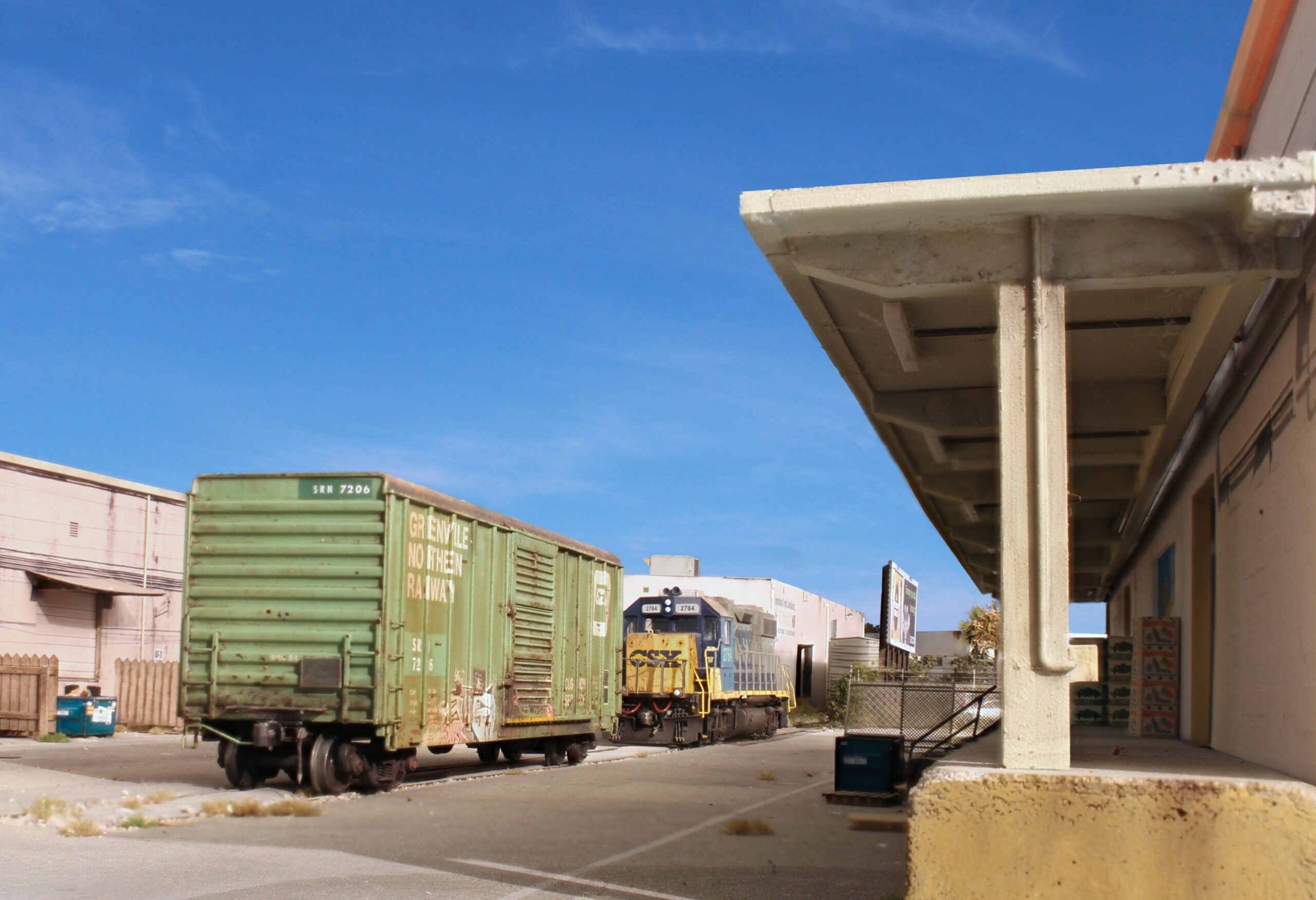
|
|
|
|
Thought For A Thursday Afternoon (Dec. 10) Being 'busy' and being productive are two entirely different things.
Becoming an Employable College Graduate December 6, 2009
There has been a lot of press lately about the difficulty college graduates are having finding jobs after graduation. Alarming percentages are moving back in with their parents because they can’t find any jobs of any description let alone one in their field of interest. Even sadder, many of the parents have invested well into six figures on college tuition. The economy is part of the problem but the larger issue is taking a very misguided approach to preparing for the day a person needs to enter the work force. Job hunting methods consistently proven to be ineffective continue to be used over and over at great cost to the parents and great cost to the young person’s confidence. When you are looking for employment, particularly if this is your first job, you do NOT want to be in position where you are mailing résumés. A resume is a piece of paper about as useful as the one hanging on the spool in front of the porcelain god. It does not tell an employer what he needs to know. Specifically, are you a hard worker, can you produce, can you get along with people, can I count on you? Sorry but attending a ‘name’ school, having high grades, having a well worded resume and having ‘prestigious internships’ won’t tell an employer much. No matter how hard the student studied, having a 4.0 gpa and an internship with Senator Smithers doesn’t tell the employer what they really want to know. As a student, you do not want to be in a position where your job hunting strategy consists of mailing a sheet of paper out to total strangers. You want to be hired by somebody that knows you well before your senior year. So, what is another approach that is easier on the student, parents, and has a much more likely chance of working? Start early, abandon traditional methods that have been proven to be ineffective, become aware of what skills and traits really do matter, and teach yourself those skills. Notice that I said ‘teach yourself’ as opposed to expecting a professor to surgically implant them in your skull. Let’s look at one example of a way to be reasonably sure the student will be employable at graduation without bankrupting the parents in the process. Take a young student that is fairly sure they want to be a business manager. For college, I would pick an institution that is affordable to the parents, has a management program (most do), and also a liberal arts program. Spending huge sums on tuition at a college solely based on an arbitrary listing in Newsweek or to impress your in-laws and neighbors is not likely to return the investment as far as making the child more employable or employable at a higher salary. Sorry. Investments in an MBA (very profitable for the schools by the way) provide equally questionable odds of returning the investment. Spend the first year letting the child get established into the college rhythm. In terms of curriculum, get basic training in the areas of finance, processes, writing, and public speaking. Through a combination of courses and self-teaching, learn absolutely everything you can about getting along with and dealing effectively with people. While in college have fun and meet lots of people. Develop a reputation among your fellow students as being somebody of very solid character that doesn’t get caught up in social bullying, meanness or being un-dependable. College friendships often last a lifetime so keep that in mind. Note to myself: I wonder how many parents will stop reading this blog after the next paragraph :) The employment plan starts towards the middle of the sophomore year. Research the fast food industry in the area and find a string of McDonald’s (or equivalent) owned by a local entrepreneur. Get a job there, doing anything. I have never worked at McDonalds, however, I do have very close relationships with people that have owned them – not single stores but regional dynasties. These regional franchise owners are millionaires many times over and they didn't get that way by being idiots. One of the greatest keys to their success is knowing how to find good people and believe me, they know how to do it. I know how they think, how they hire, and what matters to them. It is common for them to mention that they have keyed in on potential manager candidates in kids still in high school based solely on the child’s character. Once you are on staff (minimum wage by the way), you will arrive early, leave late and establish yourself as the hardest worker on the shift. You will get along with your co-workers and make your manager look good. After a few months, introduce yourself to the regional manager and tell him your plan, specifically to develop management skills. Do whatever it takes to meet the franchise owner and tell him your plan. Your fellow shift workers, focused solely on the moment may giggle. The owner won’t giggle I guarantee it. You are now on his radar as a potential solution to his biggest problem, finding great employees. Continue to be the hardest worker. Develop the relationship with the owner and management. Make sure they know you and know that you’re there for a specific reason. During your junior and senior year meet other franchise owners and central office staff. While in college, read everything you can find on dealing with and getting along with people. At the age of 21, months before graduation, I can be reasonably certain that you will have a management position at the franchise regardless of the state of the economy. Before anybody gasps about their offspring ‘just working at McDonalds’ lets look at a few facts. Even shift managers at a profitable franchise make a very good income, have great benefits, and have a lot of job security (people need to eat). Your child may have one of the highest incomes in his graduating class. Simply being employed after graduation will put him/her in the top half! A promotion to regional manager, which could be realistic before age 30, would put the child well into six figures. Throw in the vacations that franchise owners reward their managers with and things start looking even better. Remember that the industry and product is irrelevant. The kid has learned to be a manager. Managing a staff at McDonalds is just not that much different than being a manager at an aircraft parts manufacturer, medical supply dealer, or anyplace else. If after a few years they want to change industries they will be well qualified to do so and have a bank account flush enough to allow them to be picky. Using the fast food industry is just one example since it would be relatively easy regardless of geographic region. Other industries could be used the same way. I did it with construction. My college roommates did it in the steel and oil industries. The point is, to start early, focus on the right approach, and be willing to shake off deeply embedded job search methods that simply do not work very well. Focus on the values and skills that absolutely do matter: work ethic, communications skills (written and verbal), and the ability to deal with people. There are millions of small businesses in our economy, recession or not many, many of them are growing and are always on the hunt for good people. Get yourself in front of them, do it early, and show them what you are made of in person.
Four Quotes November 20, 2009 "It’s best to be nice to everybody. You never know who you might need help from in the future." R.M. This quote comes from a business owner I know. Yes, we all know you should be nice to everybody not because of what they can do for you but because it's the moral thing to do. He knows this and it wasn't his point. His point was, that from a purely pragmatic business perspective, it IS good business to be nice to everybody.
"Never confuse IQ, grade point average, a college degree, a high salary, or professional credentials with wisdom. If you fail to understand the distinction, at some point in your twenties or thirties the world will teach it to you in a way you won’t forget." Lance Mindheim Those most at risk for learning the above lesson the hard way are those just out of college, often with an advanced degree. If they haven't figured it out before they enter the workforce, the lesson will be imparted before they are forty. A corollary to the above quote is: "True wisdom is understanding how little you know".
"Better to keep one’s mouth shut and thought a fool than to open it and remove all doubt." This is a timeless classic credited to a number of sources. As we get older we find ourselves falling back on it more and more. It's a great way to stay out of trouble for sure!
"The most powerful professional skill to possess is the ability to get along with, and deal effectively with people. " Author unknown
Baltimore October 21, 2009
I spent a fascinating day yesterday rail fanning in Baltimore. Although I only live 45 minutes to the south, it's been quite awhile since I've been to the downtown proper. It is a fascinating, beautiful city that has gone through a transformation that leaves me with mixed feelings. As it stands now it is a sparkling, immaculate place that should be on everybody's list of travel locations. A large percentage of the trademark industrial structures and row houses have been perfectly restored and prepared for another half decade of service. This revitalized zone doesn't go for blocks, it goes for miles....and miles. I wrapped up the day with a touch of sadness though with the realization that the Baltimore I used to know is gone. The buildings are there, in even better condition than before, but the atmosphere has changed. Structures that used to house canneries and factories now serve as condominiums. Corner bars are now coffee shops and art galleries. Lifetime residents have been replaced by young people jogging with their cell phones and ipods. I guess that's progress and it is certainly far better than having history fall to the wrecking ball. As they say, the one thing that is constant is change. Adios old friend.
Deliberate Practice October 11, 2009 A number of years ago Florida State professor Anders Ericsson published a study of individuals that excelled in their chosen fields of endeavor. An excellent summary of the article was done by Geoffrey Colvin in Fortune Magazine. Click HERE for the article. In summary, Ericsson’s conclusion was that acquiring a high skill level in an activity had very little to do with inborn talent and very much to do with hard work and practice. Not any practice but ‘deliberate practice’. The key though was how he defined ‘deliberate practice’. In the article Colvin writes, “The best people in any field are those who devote the most hours to what the researchers call "deliberate practice." It's activity that's explicitly intended to improve performance, that reaches for objectives just beyond one's level of competence, provides feedback on results and involves high levels of repetition. For example: Simply hitting a bucket of balls is not deliberate practice, which is why most golfers don't get better. Hitting an eight-iron 300 times with a goal of leaving the ball within 20 feet of the pin 80 percent of the time, continually observing results and making appropriate adjustments, and doing that for hours every day - that's deliberate practice. I see this consistently in model railroading. I’ll be contacted by somebody that has been in the hobby for some time that, for one reason or another, has decided they want to improve their modeling or photography. They usually send me photos at the first contact and then follow up every several months. For many months the results look pretty much the same as they plug along trying to improve. Then, in a matter of weeks some magical switch seems to flip and they go from being a good modeler or photographer to an exceptional one. Had they just kept going along using the same techniques and mindset they would not have improved. However, these folks were very deliberate. They read up on new techniques, sought feedback, analyzed their efforts, read books, and spent a fair amount of time at the work bench (or behind a camera). It wasn't just the time they spent modeling or doing photography it was that they 'deliberately practiced'.
Project Post Mortem October 11, 2009
After most projects I do a post mortem of things that worked out and things I'll do differently the next time. The above photo is of my recently completed model of the D&E Argentinas structure. Like all projects there were things that worked, some mistakes and blemishes, and some approaches I'll change the next time. I do like looking at this model and can calmly accept that it is not perfect. I rarely if ever go back and correct or change a finished structure. I accept it was my best effort during that time span, place it on the layout and move to the next thing on the list. Things that worked: 1. Graffiti and patch out on walls and doors 2. Drain holes cast in concrete wall 6. Subtle stains created by wiping India ink wash off in a downward motion 7. Hurricane window covers
Things I'll change next go around 3. Roof weathering is too brown. Use gray or black next time. 4. Railings are too thick. Try to find something thinner in an etched metal product. 5. Door frames are too over powering. Leave them off next time. 8. Downspout looks too wide, go narrower next time.
Made In The Basement October 8, 2009 I want to take a moment to recognize those small niche companies that we as modelers are so dependent upon. I'm talking about the guys that make the parts for markets too small for the big houses to touch them. Not only do these little guys make such critical parts, they do so to exceptional standards. Off of the top of my head here are some of my 'go to' companies: BLMA. www.blmamodels.com. Craig Martyn. Favorite Parts: chain link fence, security fence, window mount air conditioners, grade crossings, K barriers King Mill Enterprises: www.kingmill.com. Chris Jessee. Favorite parts: laser cut pallets, laser cut scale corrugated cardboard boxes Model Memories: www.modelmemories.com Favorite parts: wafer thin etched manhole covers Proto:87 Stores: www.proto87.com Andy Reichert. Favorite parts: etched turnout details LogicTech Technologies. www.logicrailtech.com Chuck Stancil Favorite Parts: functional fusees
How We View Occupations September 23, 2009
The very public passing of actress Farrah Fawcett brought forth some interesting commentary on the state of cancer research. Sadly, for many forms of the disease we really haven’t made much progress. I particularly remember an interview with a cancer researcher at USC. The scientist re-iterated what others had said about the painfully slow progress being made in treating an illness that effects so many. The part of the interview that stuck out the most to me, however, was his comment that the lack of progress had very little to do with a lack of funding. According to the researcher, there was plenty of money. The problem was a shortage of human capital. We just aren’t getting enough high quality people entering the fields of scientific research. The same could be said for many conditions that plague society such as, autism, Alzheimer’s, obesity, addiction, and on and on. Our society has gotten to the point where, many of the most important professions just aren’t viewed as being ‘cool’. Working with rodents in a basement lab somewhere just doesn’t hold much glamour. Trying to find the cure for something that will eventually effect many of the people reading this blog doesn’t make us daydream as much as say, being a pro athlete. Those in the most critical occupations just aren't appreciated and given the degree of admiration that they should be. Without giving it too much thought I made a quick list of the most important occupations that exist in society. I know I’ve missed many of them but for starters I came up with:
In many cases these professions, society's most important occupations, have the following characteristics: low pay, long hours, a lot of grief from those you interact with, little recognition, and little appreciation from society as a whole. It’s a wonder anybody does them at all! Conversely, there are many occupations that simply are not that important to society, that pay well, and offer prestige in the public’s eyes. The solution to many of society’s ills lies not in more funding but in an overhaul of our values as they relate to critical occupations. The day we hold the work of that twenty-four year old teacher, who buys her clothes at Marshalls, in higher esteem than the celebrity will be the day that the tide turns. The day the work of that fat balding scientist at NIH is viewed as more important than whoever is on Entertainment Tonight will be the day things get better. I have no ill will towards celebrity or other ‘cool’ occupations, it’s just that in many cases what they do is just not that important to society. Heck, my occupation is not that important to society. What I have an issue with is when we hold critical professions in lower esteem than more glamorous but less important occupations. It is our values, not the individuals that hold glamour jobs, that is the problem. We now live in a culture where the coach of a top flight college athletic team is the highest paid employee in the state. I love sports but come on. That is INSANE! A sports coach making more than the university medical researchers? We really have lost our collective minds. It’s not the coach’s fault. It’s the fans of the program that value a win loss record so much that they’d pay a salary like that. Whether my alma mater’s football program goes 6-6 or 10-2 just really is not that important. It’s a game. It’s entertainment, just as a television show is. Medical research is not a game. It does impact us. Imagine sitting at a traffic light. On one side is a well known celebrity in a luxury automobile. On the other is a Toyota Corolla missing a hubcap with a scientist behind the wheel. Which holds our attention and causes us to daydream about trading lives? Those that are employed in these seemingly thankless professions do have a secret though. They do get something out of it. Specifically, they get a degree of immortality. They live on beyond their actual life spans by changing the lives of those they helped. It’s a ripple effect. Not only do others benefit directly from their work but so do those that follow. The daughter of the woman saved from cancer benefits as do her children and on and on for generations. The next time we whip out our check book to send money for the ball club at State U., maybe we should pause for second and consider whether there is a research department at the school that would do a better job of serving our long term self interests. The next time we are in the hospital for food poisoning maybe we should be pull aside that nurse that held the barf bag and make sure she knows she’s appreciated. The next time we see a celebrity in public, maybe we should be less in awe.
Vehicle Colors September 12, 2009 If you want to have an accurate mix of colors for the vehicles on your layout then almost 60% of them should be white, black, gray, or silver. The annual DuPont Automotive color popularity report broke down as follows:
Chart by DuPont
Building a Successful Layout August 22, 2009
To me the definition of a successful layout is very simple. In my view, it’s simply a layout that provides the maximum amount of enjoyment given the owner’s circumstances. What other’s think of it, its technical characteristics, the theme, the degree of detail etc. really is irrelevant. If an individual would truly enjoy placing Star Wars figures on his layout and enjoy running civil war era locomotives around them, that’s the way they should go. They shouldn’t cave and build, say a 1950’s era Santa Fe theme, simply because others would enjoy it more. We (particularly me) have to be very careful not to dismiss or be condescending towards the modeler that is truly enjoying themselves simply because their project is not of interest to us, viewed as un-realistic, or does not have operational potential. The twelve year old student, with unbridled enthusiasm for his newly discovered hobby, oblivious to the crudeness of his early efforts, is light years ahead of the old curmudgeon who spends his time doing nothing more than pontificating on a chat forum. Having said all of that, there are some things that can be done to maximize your enjoyment and increase the odds it will meet your definition of success.
I had a lot of reservations prior to building the East Rail layout. I’m embarrassed to admit that I was fairly pre-occupied with what others would think. Here we had what I thought others would view as a rather boring industrial park, in a less than popular era, all located in a region of the country that was not as popular as say the west or Appalachia. In addition, the layout was not very big. In the end I put my natural desire for accolades aside and proceeded anyway. The end result was a layout that provided me more enjoyment than any I had built since. It was (and still is) a total joy and until I started the Downtown Spur I practically ran the rails off of it. Surprisingly, people I had never met before came out of the woodwork expressing their interest in the theme, simple design, era. etc. So now I could count among my misjudgments how inaccurately I judged what others interests were. Don’t be afraid to be utterly selfish and design a layout for yourself not others. The vast majority of the time it will be you and you alone that is around it so make sure it satisfies the primary audience – YOU!
A Character Test July 29, 2009
You can get a good sense for the character of people you don’t even know simply by watching how they handle the most ordinary of situations. It’s really not much of a leap to assume that how a person handles a seemingly insignificant event is often a pretty good indicator of how they handle everything. Every now and then I drop into the local Wendy’s fast food joint for lunch. Several weeks ago I was seated at my table and watched as a well dressed gentleman in his early sixties walked to his table, tray in hand. His meal was in the center of the tray and a large milk shake on the corner. As he scanned the room for an appropriate table, he inadvertently let the corner of his tray dip and there want the milkshake. Sixteen ounces of frozen dairy product literally exploded on impact like a wet hand grenade. At this point my interest is picking up because, without knowing it, this poor guy was going through a character test. Surprisingly, he didn’t react much one or the other to the fact that his dessert was now spread out over a fair number of square feet on the floor. Without saying anything, he walked to the condiment stand, pulled out about fifty napkins and proceeded to clean up his mess. A few minutes later a restaurant employee came over to deal the situation. At that point, with the cavalry on the scene, I would have expected him leave. He didn’t. He moved to one side to make room for the restaurant employee but continued the clean up until the task was completed. He then finished his lunch, got up, and drove off in his Mercedes. On the surface this would appear to be such an insignificant event. Maybe, but I think it says a lot. People of character clean up their messes. People of less character walk away and let others clean up after them.
Self-esteem June 28, 2009
You here a lot of talk about self-esteem these days, particularly when it comes to young people. Most would agree that developing, nurturing and protecting it, particularly in kids, is a key component in creating a sense of well being and feeling of worth as a person. I agree wholeheartedly. Where I sharply part ways with many though, is how it is developed. The current view seeming to be that self-esteem is so fragile that anything short of gushing praise, even for the completion of the most mundane task, will cause irreparable damage. While the intent is altruistic, the approach subtly takes us down the wrong path. By going so overboard in praising and rewarding efforts that are far below a young person’s true potential, we inadvertently condition them to be comfortable with mediocrity. In short, we get the opposite of what we are trying to accomplish and effectively rob them of the true joy that comes from accomplishing something meaningful. I know for a fact that at some universities the professors are instructed to never give out a grade lower than B regardless of performance, including students that never show up for class. The thinking behind the policy being that low grades will limit the student’s ability to find a job (all of which might roll back on the university which could be seen as turning out unemployable students). Self-esteem can be built in many ways. One of those ways is to reach a goal that is a real stretch. The true masters at building self-esteem are those teachers and coaches that have an innate ability to know what a child’s true capabilities are and demand that they work to that level. If little ‘Billy’ puts five minutes of halfhearted effort into an art project and the teacher holds it up and say’s “Ohhhh, Billy, that’s sooooo good. “ Or, “It’s o.k. Billy you really tried”, they are doing the child a disservice. We seem to be obsessed with the word “tried”. Trying is great, if in fact that is actually what happened…. close to maximum effort. Unfortunately we throw the word out pretty loosely, often applying it just for showing up and putting one foot in front of the other. Taking the same scenario, the true master will pull out a high quality piece of art and lay it in front of Billy and say ”Let me show you what really good art is about Bill. I think you are capable of this. It’s going to be tough but you should really buckle down and put in the effort. The five minutes you put into what we have here is not going to get you where you want to go. It is just not going to cut it.” My first exposure to ‘self-esteem’ building came in the sixth grade back in the early 1970’s. As anybody my age or older can attest, the world view was much different back then. Teachers tended to stick with their profession well into their sixties and carried much more power to do things their way in the classroom. They were generally free from meddling bureaucrats and absurd, endless, government mandated achievement tests. Coming into sixth grade, I had a pretty high opinion of my academic abilities and felt I had good grip as to what doing a good job meant. I was to be in a class taught by Mrs. Fiscus, a teacher I knew little about other than there was a long waiting list to get into her class and that my parents had lobbied very hard to have her be my teacher. This should have been a tipoff as to what lay ahead. Anybody my age has had a Mrs. Fiscus – barely five feet tall, plump, gray hair pulled back in a bun, pearl necklace, unpretentious but immaculately dressed every day, age 60 plus, turkey flaps under the chin and arms. You know the look. At the beginning of every school year there is a defining moment that determines who is running the class, the teacher or the students. Sixth grade, 1971 was no exception. The first week of the year, while Mrs. Fiscus scrawled away on the blackboard, her back to the class, one of my heathen ‘home boys’ launched an eraser at the board. Mrs. Fiscus calmly turned around and asked for the perp. to confess. Nobody came forward. Keep in mind that this women had been teaching almost 40 years so there was nothing the band of savages in front of her could put forth she hadn’t dealt with before. She made the request a second time. The offender could step forward or she’d move to plan B. No takers. On to plan B. “O.k.”, she said. “I know that the person who threw the eraser was a boy (it was). I need every boy in class to come to the front of the room. I want all of you to circle around the conference table, grab it by the edges, and bend over”. Nervous laughter ensued as we wondered what she was up to. A hefty ping pong paddle hung from a hook behind her desk. She took down the paddle, walked behind each boy in the line, and began to ‘lay the wood’ to each and every one of us. Despite being an older woman, she had a swing like Willie Mays. I don’t know what was worse, the sting of wood hitting flesh or the humiliation of crying in front of your peers. Somewhere in that line up of sixth graders the misbehaver, without question, got his punishment. The rest of us got a very clear message. When it comes to disciplining kids, I’m more of a time out type of person myself. In retrospect, however, I have to say I don’t think I suffered any lingering long term psychological damage from the event. I will say this, 38 years later I still remember it. I think I can speak for every other boy in class that we took her message ‘on board’. The tone was set. We now had what was called "an atmosphere conducive to learning". With the point having been made, the remainder of the lesson continued with absolute silence from the peanut gallery. Shortly thereafter, the real lessons began. Even at that age, I was somewhat of a history buff and took a fair amount of pride in my knowledge level. We were given a history report assignment that was of interest to me and I took it upon myself to hit this one out of the park. I really put a lot of time into it and was sure I’d covered all of the bases when I turned it in. My mind drifted to the day the grades for the report came out. I fantasized about being called to the head of the class to collect my gold star and rake in the teachers praise and admiration of my adoring fans. The big day arrived and the papers were returned. My paper was dropped on my desk, I flipped it over and found a page totally covered in red ink. At the top was a large C-. I was stunned feeling is if I’d been hit in the gut with a 2x4. I studied the paper from end to end and become very confused. Without question, I had indeed covered all of the required topics. After school, I waited for the class to clear out and approached the teacher. “Uhhh….Mrs. Fiscus I’m a little confused here about this C-" . This was the first time I’d ever received a grade lower than a B. She smiled, took a look at the paper and said, “Sure, what are you confused about?" I explained that I had hit all of the bases and felt I was deserving of an A. “That’s quite right. You did adequately address the history topic but, as you can see, there were numerous spelling, grammatical and punctuation errors. Taking all of that into account, the net result is indeed a C-". Whooaaaaa. Back up the bus. “I think you made a mistake Mrs. Fiscus. English class is first period. This is history. They are two separate subjects” “Not in my class Mr. Mindheim. Now if there isn’t anything else, I have further work to do”. I ran home at a dead sprint and laid the full injustice out in front of my parents. Surely they’d load the whole family into the car and race back to school, tires squealing, to confront the principal and demand that Mrs. Fiscus be fired. I’d completely forgotten the extended lobbying effort they’d put into getting me into the class in the first place. Nor did I factor in the fact that even if I were pulled from the class there were other families eagerly waiting to put their kid in my spot. Let’s just say my parents were totally unsympathetic to my plight. Having exhausted what limited legal options I had at my disposal, I had no choice but to go back to school and do things Mrs. Fiscus’ way….as unreasonable (perhaps psychotic) as I felt they were. I had to waste my time making sure the reports were grammatically correct. I had to waste my time making sure that they followed the intro., body, and conclusion format- all sorts of stupid stuff like that. Having no choice, I stuck with it. I still remember my final term paper grade. It was a B+. That B+ meant more to me than many of the A’s received before or since. That is how you build self-esteem and she was a master. (God help me for any English errors in this blog as I can almost feel the wrath of Mrs. Fiscus reaching out from the grave. She was that tough.)
Setting a Construction Schedule May 25, 2009 For this layout I've set a construction schedule for completing the layout as well as intermediate milestones to reach that end. A fair question to ask would by why bother with a schedule since this is just a hobby? Everybody's personality and motivation is different. The answer in my case is that without such a schedule I'd never get anything done! My rough plan is to have the layout at least largely complete by the time my son is finished with college (maybe....hopefully) in eight years. By that time I may have had my fill of home and lawn maintenance and be ready for serious home downsizing. I divided the layout into eight sections with the general idea of completing one section a year for eight years. If I fall behind or don't reach that goal it's no big deal but at least it keeps me moving. Each one year construction milestone is rather un-ambitious and easily attainable. I should be able to work at a leisurely pace and have some months here and there where nothing gets done and still be on track.
The Case For Modeling the Modern Era May 18, 2009
Many of the aspects of 1950's railroading which we find so appealing still exist today. In this 2007 photo, a reefer is spotted at a frozen food industry just slightly longer than the car itself.
The term ignorance carries a lot of negative connotations. If you look at the definition though, ignorance is just a lack of information. Sometimes it has ugly consequences, more often it’s more benign. In most cases, not having information simply results in our lives being slightly more difficult in un-important areas. Being ignorant of how to work your television remote is inconvenient. Ignorance can also be benign in the sense that it just means we miss out on something or avoid a potentially enjoyable activity because we are ignorant of the benefits, ignorant of what it offers. For many years I was ignorant of what modern era railroading was all about. Completely overlooking the benefits of modeling the modern era is an example of ignorance as it applies to model railroading. Having a full understanding of modern railroading and then making a conscious decision that it’s not for you is not ignorance. It’s an informed decision based on personal preference. Totally discounting the modern era without knowing anything about it is ignorance. As a hobby, we have a white-knuckle death grip on modeling the steam to diesel transition era. My guess is that eras before 1940 or after 1960 account for less than a third of the themes being modeled. Until about five years ago, I was certainly in this mainstream group. I was completely immersed in modeling the Monon Railroad during, you guessed it, 1955. If a modeling subject came up dated after 1960 my mind shut like a bear trap. What could be more boring? I live near our Nation’s Capital. Railroading here consists of one double track main running through our county of almost a million people. There are no industries, no yards, no locals….nothing. If Washington, D.C. were a representative sample of modern railroading one could be forgiven, even congratulated, for not modeling such mind numbing boredom. The problem is, Washington, D.C., is NOT representative of all of modern railroading. There are numerous cities in the US where the 1950’s style of railroading not only exists just as it did 60 years ago but is thriving. Not just short lines but the big carriers as well, Take two cities on opposite ends of the country for example, Miami and Seattle. Both are comprised of dense spider webs of track serving diverse industries. There are small industries that take single boxcars, there are industries on the water served by both barge and rail, there are industries taking every type of car imaginable. Trains are short, often less than ten cars. Passenger trains still exist that stop every several miles, they’re called commuters. Switch lists are still used albeit in electronic form. In many locations modern railroading is not just similar to modeling the 1950’s, it’s measurably better. Why? You can see it. You can experience it now. The availability of research material is unlimited and it’s instantaneous. In many cities you can park in a public lot, open a cold soda, turn on the radio and watch the local work right in front of you. Am I saying everybody should model the modern era? Not at all. However, if you feel your view of the hobby is slipping from being a passion to merely a passing interest the modern era is worth a look. There’s nothing like being trackside while a machine the size your house, powered by cylinders the diameter of trash cans shoves a boxcar down an alley. I’ll be fifty years old next year so I’m no spring chicken. After discovering the modern era, I feel like a kid in a candy store and my interest in the hobby has been given a jump start. Here’s the biggest laugh of all. Who lifted my veil of ignorance? Was it a group of enthusiastic twenty-somethings typically associated with the modern era? No, it was a small cluster of ‘over 60 guys’ that sat me down and explained to me what the modern era is all about. There’s another lesson….listen to those age 60 plus guys, they truly are wiser.
Money May 3, 2009
Here we see our typical flat broke teenager doing what he should be at that age - learning to glue two pieces of plastic together.
Money is an interesting subject. It’s interesting from the standpoint of how the amount we possess at different points in our life shapes our behavior and development. Too much of it at a young age, in my view, eliminates the striving and struggle that is a necessary element of artistic and personal development. Too little of it later in life inserts the struggles at an age where it really shouldn’t be. It is fascinating isn’t it, the link between lack of financial resources and artistic development? It never really occurred to me until recently but it’s amazing how many writers, musicians, painters, and movie makers come from such average financial means. Equally fascinating is the fact that when their talents eventually lead to financial stability, their creative production doesn’t tail off. Model building is no different. Starting your modeling activities at a point in time when financial resources are meager is an enormous advantage. Whether you are a teenager, college student, US military, or young person early in your career, having limited funds will ultimately be a huge blessing. With very little capacity to purchase finished models or expensive kits, you have no choice but to build most things from scratch, weather you own rolling stock, and perhaps build your own track. As you watch those who are more financially secure walk out of the hobby store with bags of gleaming merchandise you will likely be leaving with a few X-acto blades, a bottle of paint, and some glue. When your models break, you will not have the money to replace them and will, therefore be forced to learn how to repair them. Although it doesn’t feel like it at the time, such circumstances are a gift. Initially, years will pass where your homegrown efforts look far short of what you see in the magazines. The walls of your structures won’t be square, the windows will be crooked, and the globs of glue unsightly. Time marches on though. At some point that fifteen or twenty year old modeler producing models that look like soap carvings, morphs into the master modeler. Having never had the luxury of buying a built up kit the youngster, now an adult, is capable of scratch building any structure he needs. His choices are not limited to what is available from the commercial manufacturers. Projects go together quickly and smoothly with seamless joints, perfect corners, and subtle and masterful weathering, He is no longer stopped in his tracks when something breaks. The repair skills learned out of necessity a decade before, can be brought to bare. Regardless of your age, if you find yourself in the hobby with limited funds, enjoy the ride. Savor each project for what it is, a step in the never ending learning process. Regardless of the final appearance of a finished model, appreciate and accept it for what it was – your best effort given your skill set at the time it was built.
Shown above are some of the modeling efforts from my teenage years.
A different set of challenges face the large number of modelers that enter the hobby at a point in life where they are more financially secure. Such individuals have the advantage of paying to have others do the aspects of the hobby they don’t enjoy. If this is your situation you have to be vigilant and be aware of how often the credit card is being popped out. Are you purchasing a backlog of kits and cars grossly in excess of the amount of time it will take to build them? If so, set a personal rule that you won’t buy another kit until your backlog of un-built ones are assembled, given away, or thrown away. Don’t cheat yourself out of enjoyable activities and try to avoid knee jerk spending impulses if, upon further thought, you would gain satisfaction out of building it yourself. If you would not get satisfaction out of building it then there should be no guilt in purchasing the finished product. There is a one thing the financially secure hobbyist can purchase that, if handled properly, will assist in increasing their skills. They can purchase time. By paying somebody else to clean your house, cut your grass, and repair your car you can free up time better spent on modeling. You can also speed up your learning curve by investing in attendance at modeling conferences, books, and ‘how to’ DVD’s. Of course, purchasing the books and going to the conferences is not particularly productive if you don’t do so with the mindset of applying what you’ve just learned. For the fifty or sixty year old, financially secure, modeler the hobby does offer the chance to move back to the simpler times of your youth. Allow yourself to take on building that kit without concern for whether it looks like something built by a teenager. It probably will. Enjoy being that teenager again.
Authenticity April 9, 2009
Walking through Allapattah's produce district is like slipping on a pair of worn in blue jeans - comfortable, relaxing, and familiar. It is an authentic place. By that I mean, what you see is what you get. It doesn't try to be something that it is not. It is quietly self assured, comfortable with and accepting of its imperfections. Allapattah is the real deal. Its probably what the inside of our homes look like when we know company is not coming, clean but not necessarily tidy. You could walk the sidewalks all day without fear of being hassled. By the same token, if you stopped somebody on the sidewalk they'd gladly engage you in a ten minute friendly conversation without giving you the feeling you were holding them up. The photo above is a good representation of the neighborhood as a whole. As hot as it is, there is always a fifty year old oak tree nearby to provide shade, a bench to sit on, a produce stand where you can get a glass of ice cold freshly squeeze orange juice. Philly, Chicago, Newark, Milwaukee, you pick the city, they all have their own versions of this gem. They are national treasures hidden in plain sight. Visit them. Photograph them. Experience and savor them.
Player or Fan? April 2, 2009
Watching a ballgame is entertaining. However, merely watching will never provide the deep level of satisfaction that comes from being a player. Obtaining that degree of satisfaction is only possible through participation.
Are you a participant in the hobby of model railroading or an observer? In other words, are you a player or a fan? The answer to the question really doesn’t matter. What does matter though is that you be able to answer the question to yourself honestly and free of rationalizations. I love watching basketball. Youth league, high school, college, or pro it doesn’t matter. I can think of no more enjoyable way to spend a weeknight than watching a couple of high school basketball teams going at it in a ratty gym somewhere. I’m clear about one thing though. I’m a fan, NOT a player. I’m an observer, not a participant. I watch the ‘geezer leagues’ (geezer being anybody my age) play at the rec. center and pause to admire the passion these guys still apply to the game. The thought of me joining such a team, however, has a half-life of about a milli-second. I understand and accept the fact that the players on the court get deep satisfaction from playing while I am merely being entertained. When we look at how we spend our leisure time it’s important that we understand the distinction between activities that are purely entertaining and those that are satisfying. Watching a good movie on television is entertaining. Making a good movie is satisfying. In order for an activity to be satisfying there must be some degree of engagement. Being engaged means that we affect the result in some way, even if only to a small degree. No matter how much we love watching that ball game on TV, no matter how loud we yell at the screen, we have zero impact on the outcome. When you paint a picture, play an instrument, volunteer, or build a boxcar kit you are directly affecting the result. The degree of engagement directly correlates to the amount of satisfaction we can expect. Why does all of this matter? As a practical matter, much of our leisure time is going to be spent on entertaining activities– going to a movie, reading a book, going out to eat, watching television etc. It’s the reward for the ‘less than entertaining’ things we need to address during the rest of the week. There is a danger though in not being aware of the distinction between entertaining activities and satisfying ones. If our leisure time inventory is stocked only with entertainment and the satisfying column is totally bare, we miss out. A sense of emptiness or ‘missing something’ creeps in that we may not be fully aware of. It is important that people have at least one leisure activity that extends beyond idle entertainment and is also satisfying. Careers and family are deeply meaningful. However, kids grow up and have lives of their own. Careers eventually end in retirement. We all need at least one selfish, ‘just for me’, activity that is satisfying. I am not suggesting that this satisfying activity be model railroading. It could be anything. There should be no guilt if all a person wants from the hobby is entertainment. I am entertained by reading a surfing magazine even though I have no desire to be a surfer. That’s no different than a surfer reading a model railroading magazine solely to be entertained. It is important though that you be straight with yourself about the level of engagement you have with the hobby. To not do so puts one on a slippery slope of rationalization and denial. If your level of participation in model railroading is superficial at best, do you have another leisure pursuit that fills the bill? If not, you owe it to yourself to find something that is satisfying, something that you will engage. Fortunately, the ‘participation’ umbrella is a large one when it comes to model railroading. Building something, anything is the most obvious. However, there are many other ways to be involved in the hobby in a deeply satisfying manner without ever gluing two sticks together. Operating a layout, writing an article, photography and volunteering are other examples. As broad as the participation umbrella is however, many who think of themselves as being engaged in model railroading manage to stay out in the rain so to speak. They fritter away hours, years, even decades on activities that disguise themselves as being part of the hobby when in fact they are not. What are those non-productive activities we so often delude ourselves into thinking qualify as model railroading? Chat forums and impulsive purchasing certainly have to be at the top of the list. Spending an evening on an online forum writing missives to some guy named ChooChoo666 is not productive, and is not model railroading. Not only are many chat forums not productive, some are pretty toxic. Getting in an online debate over the latest hobby conspiracy theory with somebody that won’t even sign their true names to the post will produce absolutely nothing of lasting value to you or anybody else. Rampant, unfocused purchasing of equipment, structures, and rolling stock is not participating in the hobby either. Needing a coal yard for your layout, buying and building it is one thing. Having thousands of dollars invested in kits totally unrelated to any theme, that haven’t been built, and will never be built is not healthy. Its the Imelda Marcos syndrome. Finally, building a layout in your mind that you ‘hope’ to have ‘someday’ is not model railroading. Its fantasizing. Teaching yourself to solder, glue, cut, paint, and weather while waiting for that ‘someday’ layout is what distinguishes productive activity from idle pipe dreaming. The danger we face by spending excessive time in these types of unproductive activities is we are not aware that they we are in the margins, deluding ourselves into thinking we are participating in the hobby. We sell ourselves short by thinking we ‘have a hobby’ when in actuality we are merely being entertained much in the same way we would be if we were to watch a TV show or idly read an issue of People magazine. Even active modelers greatly diminish the satisfaction they could receive by spending disproportionate amounts of time on the computer, binge buying, and fantasizing. The next time you sign on to your computer to check your chat room forums, or whip out your credit card, ask yourself, are you a fan or a player? An observer or participant? Within the narrow context of model railroading it doesn’t matter as long as you have the self awareness to be able to answer the question. Within the context of your leisure time as a whole, the subject does matter. As humans we have a hard wired need to impact something in a creative, positive manner no matter how small. That’s hard to do if all of our leisure activities fall entirely in the idle entertainment category.
Rough Part of Town, The Great White Rail Fan March 2009
One of the nice things about a private website is you can write about subjects that have absolutely zero chance of seeing the light of day in the mainstream hobby press. Some time in the past year, I can’t remember exactly when, I was giving a presentation at a prototype modeling convention. Many of the slides I was showing were taken around the produce center of Miami, the Allapattah neighborhood to be specific. About half way through the presentation one of the attendees made the comment, “Boy that sure looks like a rough part of town”. There was no malice in the statement, it was just his natural reaction to what he saw. It caught me off guard for a moment as I surveyed the slide on the screen looking for what could have triggered the comment. After a few seconds it dawned on me, scrawled across several of the structures was some graffiti. That was it. That was the source of the remark. Throughout the year at other presentations, slides of the Downtown Spur evoked similar reactions along the lines of, ‘that area looks really dangerous’. The source of the comment could be graffiti, a homeless person, or a cluster of people of different races. The thought progression of many white suburban Americans, or suburban middle income Americans of any race, is to view a geographic area and think, “graffiti, weather worn structures, people not the same color as me. Hmmmmm. If I go there I’ll probably be shot.” Seriously. It’s a primal, survival driven reaction. Its ignorance. Viewed objectively, ignorance is just a natural reaction to not having a realistic grasp of the facts. What do people in ‘the rough part of town’ do all day? Contrary to what many white suburbanites may think, most of them go to work every day – often to two jobs. What do they think about? Probably the same thing as you do, their kids, their family, their financial welfare, their health. Its highly unlikely that they are thinking “I hope a rail fan rolls down the street today so I can pop him".
No, these produce workers are NOT flashing gang signs. A better guess is the guy with the phone owns the business. Regardless, they were good sports and kind enough to take a break from loading tomatoes and pose for a few shots.
When I visit Allapattah, I park my car and walk. Not once has the car been on blocks upon my return. Am I the only white dude on the sidewalk? No, but I’m certainly in the distinct minority. Do I stand out? Probably not. For one, most people are so busy working, getting to work, or going to the produce stands they don’t even notice me. Do I have to pass by a homeless soul every block? Yes. Is that homeless person lying in wait hoping this is the lucky day that a stray photographer wonders by his box so he can pounce? Lets be real. What is the payoff for taking this risk? Well, frankly its not a risk but the payoff is enormous. It’s the experience of being totally enveloped in a sensory environment I could never witness in my suburban home city populated by Best Buys, Applebees, and Starbucks. In my favorite ‘rough part of town’, Allapattah, you are face to face with people from all over the world, pallets of produce stacked ten feet high, original art deco architecture untouched by the condo developers, and great food. As you walk down the sidewalk, you are treated to veritable concert of music emanating from the adjacent businesses. From a rail fan experience, it’s a like entering a time capsule and being transported back to the 1950’s. When I’m walking around Allapattah occasionally somebody will approach me and ask what I’m doing with the camera. Does that make me nervous at first? Yes. What do I do? I tell them what I’m up to. In each and every case the individual stopping me has followed up with something along the lines of “Just curious. I’ve lived here a long time. You’re right. It really is interesting.” Am I suggesting that you rail fan wearing a red Hawaiian print shirt, Bermuda shorts, and black knee socks without a thought to your surroundings? Wave a few gang signs to passersby maybe? Of course not. Are there areas in the U.S. that truly are tantamount to war zones and are dangerous all of the time. Absolutely. But, not as many as most people think. Common sense dictates that you be aware of your surroundings and take prudent precautions. However, prudent precaution can reach the point of hyper vigilance and cause us to miss out on some the richest experiences life makes available to us. Many of the neighborhoods many consider ‘too dangerous’ feature a treasure trove of architectural masterpieces, fantastic food, and the best rail fan locations to be found. Is it worth missing out on this bounty because of caution that extends beyond all bounds of reason? Not for me. When we erroneously label a neighborhood as ‘the rough part of town’ we run the risk of missing out on some of the most textured, culturally interesting, and fascinating areas of the country. We miss out on some of the best life has to offer and that truly is a shame.
Old Dogs, New Tricks (February 2009) Recently I announced to my now teenage son that there would be a new after school routine with respect to getting homework done. He was less than pleased with the new plan stating, " I liked the old system (i.e. procrastination). You know I don't like change". In a nutshell, he summed up human nature in general. By design, we generally don't feel comfortable with change and prefer to stay with the old way of doing things even when simpler and more effective techniques and skills would make our lives easier and measurably better. The above certainly applies to model building. Over the past decade there has been an explosion in the number of new techniques, tools, and materials that can make our models look so much better. In most cases the newer methods are even easier than the old methods we cling to so ferociously. For example, for some time my son had been suggesting to me that I make myself familiar with the YouTube web video site. Even though it was a ridiculously simple matter of entering a few key strokes, the luddite in me resisted. In my view YouTube was for hip youngsters and as such would have no appeal to a dinosaur as un-hip as myself. Eventually he wore me down though and opened up a new world with infinite applications to model railroading and rail fanning. Interested in a 'how to' modeling video? Just enter the topic in YouTube's search window. Want a video of the Miami River? A few mouse clicks offers up stunning footage of a pair of tugs hauling a container ship right through the area I'm modeling. Why did I resist learning something that was so simple and yet ultimately so helpful? Its in our DNA. Whether its model building or other aspects of our lives we need to develop a self-awareness of our natural resistance to trying new things. On the modeling front, I sit down at the beginning of each year and list two or three new modeling skills that I hope to develop over the next twelve months. On this years list: learning to use the Alclad brand of metallic lacquer paints and improving my skills in the area of photographic lighting so I don't have to spend so much time color correcting my photos with an editor. Everybody has their own list of new skills they'd like to acquire. Listed below are some suggestions. Why not give yourself a gentle nudge to cross a few off your list each year.
These are just a few examples off of the top of my head. Sources of information include the internet, DVD's, seminars, magazines, and input from fellow modelers. Drop me a line next year and let me know how you did on your list. |